They Moved The Elderly Woman Away From The VIP Tables Until The Helicopter Landed For Her
Chapter 1: The Woman With The Old Envelope
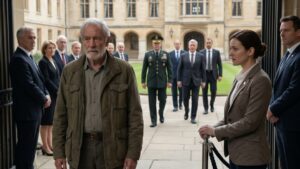
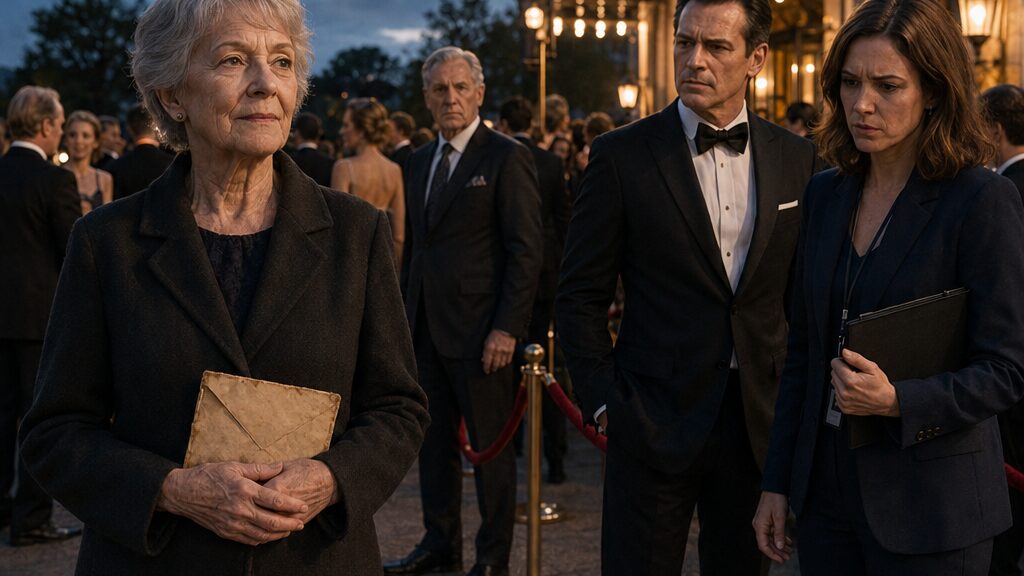
“Ma’am, you can’t go through this entrance.”
The security supervisor stepped into Donna Wilson’s path before she had even reached the velvet rope.
The words were loud enough for nearby guests to hear.
A few heads turned.
Donna stopped.
Around her, expensive suits drifted toward the illuminated entrance of the Veterans Recovery Foundation Gala. Strings of warm lights stretched above the lawn. Uniformed service members stood beside donors and politicians. Laughter floated from the reception area.
Donna looked down at the worn envelope in her hand.
The paper had softened with age. The corners were rounded from years of being tucked into drawers and folders.
She slid the invitation from inside.
“I believe this is the correct entrance.”
The supervisor glanced at it.
His expression tightened.
“Where did you get this?”
“It was mailed to me.”
The man turned the card over as if expecting it to reveal a trick.
The invitation looked older than the others arriving that evening.
The foundation had sent updated electronic confirmations weeks earlier.
Donna knew because Emma Davis had called her office.
Three times.
Each time Donna had politely declined special arrangements.
She preferred arriving quietly.
Now she wondered if that had been a mistake.
Not because she minded waiting.
She had spent nights waiting beside field radios in places far worse than this.
But because people always seemed embarrassed after making assumptions.
The supervisor pointed toward another line.
“Guest registration is over there.”
“I am registered.”
“Not through VIP access.”
Donna looked beyond him.
The entrance banner displayed photographs of wounded veterans helped by the foundation.
Some of those programs existed because of decisions she had made decades ago.
No one looking at her now would know that.
That was partly her fault.
She had worked hard to make sure her name disappeared from the story.
“Please check again,” she said calmly.
The supervisor sighed.
Behind Donna, another guest shifted impatiently.
A woman wearing diamonds glanced at Donna’s plain navy coat and looked away.
The supervisor handed the invitation to a younger staff member.
“Run the name.”
The staff member disappeared.
Donna waited.
She rested both hands atop the envelope.
A familiar habit.
As if the paper itself carried weight.
Across the lawn, Emma Davis hurried between tables with a headset pressed against one ear.
She was already behind schedule.
The arrival of two major donors had forced changes to seating assignments.
A speaker had canceled.
One caterer was late.
Now another staff member was waving her over.
Emma crossed the lawn.
“What happened?”
The security supervisor held up the invitation.
“This guest claims she belongs in VIP.”
Donna almost smiled.
Claims.
Emma accepted the card.
The moment she touched it, something felt unusual.
Not the paper.
The seal.
In the lower corner sat a faded military insignia.
An older design.
One she vaguely recognized from foundation archives.
It had not been used in years.
Her eyes narrowed.
“Where did this come from?”
Donna answered simply.
“It arrived with the invitation.”
Emma looked closer.
The seal wasn’t printed.
It had been embossed.
Someone had intentionally used an obsolete mark.
That made no sense.
The foundation barely remembered its own early records.
Why would anyone use an old military seal?
“What name?” Emma asked.
“Donna Wilson.”
The answer meant nothing to Emma.
The supervisor folded his arms.
“I think somebody sent her the wrong packet.”
Donna remained silent.
Emma noticed that.
Most people argued.
Most people became defensive.
This woman simply waited.
Not timidly.
Not helplessly.
Patiently.
As if she had already accepted that explanations took time.
A radio crackled at Emma’s shoulder.
Another problem demanded attention.
She checked the guest database on her tablet.
A name appeared.
Donna Wilson.
Confirmed.
Her seat assignment existed.
But something else caught Emma’s eye.
The assigned table number was unusual.
Not a donor table.
Not a sponsor table.
Not even a veteran recognition table.
Just a code.
One she didn’t recognize.
Emma frowned.
“She is registered.”
The supervisor blinked.
“What?”
“She’s on the list.”
The man looked irritated rather than relieved.
“Well, then put her somewhere.”
Emma hesitated.
“The VIP assignment isn’t showing properly.”
Before she could continue, another voice entered.
“What’s happening?”
Richard Thompson.
Chairman of the foundation.
His tuxedo looked flawless.
Everything about him projected control.
Unfortunately, tonight felt determined to challenge that control.
The supervisor explained quickly.
Richard took one look at Donna.
Older woman.
Worn coat.
Old invitation.
Confusion.
Exactly the kind of situation he didn’t need.
Major donors had traveled across the country.
Reporters were expected.
Military leadership would arrive later.
Mistakes could become headlines.
“Is she verified?” Richard asked.
Emma nodded.
“Yes.”
“Then seat her.”
“The table assignment—”
“Put her at one of the overflow tables.”
Donna quietly held out the invitation.
“I believe there may be a specific seating arrangement.”
Richard barely glanced at it.
“We’re very busy tonight, ma’am.”
The dismissal was polite enough to avoid complaint.
Sharp enough to end discussion.
Emma felt a flicker of discomfort.
Donna simply nodded.
“Of course.”
No argument.
No demand.
No mention of titles.
No appeal to authority.
Richard was already walking away.
“Move her inside,” he called.
“Not near the sponsor section.”
A strange silence followed.
Emma handed back the invitation.
“I’m sorry for the confusion.”
Donna slid it into the envelope.
“There’s no need.”
“You don’t seem upset.”
A faint smile touched Donna’s face.
“I’ve waited in worse places.”
The answer lingered longer than Emma expected.
Before she could ask what it meant, another call pulled her away.
Donna entered the gala grounds alone.
People moved around her without seeing her.
Servers passed carrying trays.
Guests clustered near tables draped in white linen.
No one recognized her.
That suited her.
Or at least she told herself it did.
She found the assigned overflow table near the edge of the lawn.
Not hidden.
Not important.
The perfect place to disappear.
She sat.
For a while she simply watched.
The foundation had grown larger than she ever imagined.
Scholarships.
Treatment programs.
Family support networks.
Entire buildings now carried names she didn’t recognize.
Yet none of it erased a memory she carried.
A briefing room.
A decision.
Young soldiers.
Loss.
The foundation existed because of what came afterward.
Because responsibility did not end when a battle did.
She touched the envelope again.
The paper felt familiar.
Grounding.
A reminder of why she had come.
Not for recognition.
For remembrance.
A voice interrupted her thoughts.
“Wilson?”
Donna looked up.
An older man stood beside the table.
Gray-haired.
Straight-backed despite his age.
His eyes remained fixed on her.
Not her coat.
Not her invitation.
Her face.
“Excuse me?” Donna said.
The man took another step closer.
His expression had changed.
Confusion.
Recognition.
Disbelief.
“Your name is Wilson?”
“Yes.”
The man’s hand tightened around his glass.
For several seconds he said nothing.
Then he looked toward the main stage.
Back toward Donna.
And finally toward the worn envelope resting beside her plate.
“That’s impossible,” he whispered.
Donna recognized him then.
Not immediately.
But enough.
William Brown.
Older now.
Much older.
Yet still carrying the same careful posture.
The retired colonel stared at her as though a ghost had appeared among the gala guests.
And for the first time that evening, someone looked at Donna Wilson as if they knew exactly who she was.
Chapter 2: A Name Nobody Remembers
William Brown almost dropped his drink.
Emma noticed immediately.
She had spent the evening monitoring problems, and people rarely froze in place without creating one.
The retired colonel stood near the edge of the lawn staring toward the overflow tables.
Toward Donna Wilson.
Emma approached.
“Colonel Brown?”
His attention snapped back.
“What?”
“Is everything alright?”
William looked at Donna again.
“Who invited her?”
Emma blinked.
“She was already on the list.”
“Who invited her?”
The question carried a different weight now.
Emma lowered her voice.
“Do you know her?”
William hesitated.
For a moment she thought he might answer.
Instead he said, “I know the name.”
That only deepened the mystery.
Across the lawn, Donna remained seated quietly beneath the lights.
Other guests ignored her.
A waiter offered coffee.
She thanked him.
Nothing about her behavior matched William’s reaction.
Emma followed his gaze.
“What am I missing?”
The retired colonel shook his head.
“I may be mistaken.”
“But?”
William exhaled.
“The woman I’m thinking of wouldn’t be sitting at that table.”
Then he walked away.
Emma stood motionless.
That answer raised more questions than it solved.
An hour later she found herself inside the foundation’s temporary archive exhibit.
The display tent had been assembled for donors interested in the organization’s history.
Old photographs covered the walls.
Historic documents sat beneath glass cases.
Most guests ignored them.
Emma never had.
She preferred facts over speeches.
Tonight she needed facts.
She searched for the foundation’s earliest records.
The recovery initiative had been launched nearly thirty years earlier.
Its origin story appeared everywhere.
A difficult deployment.
Returning veterans.
A commitment to long-term support.
The official narrative celebrated collective effort.
Yet something bothered her.
A name seemed missing.
She couldn’t explain why.
Perhaps because of William’s reaction.
Perhaps because of the seal on Donna’s invitation.
Emma stopped before a large photograph.
The image showed military leaders standing beside hospital administrators.
A plaque beneath it read:
FOUNDING PARTNERS OF THE VETERANS RECOVERY INITIATIVE
Several faces were labeled.
One space wasn’t.
The woman standing near the center had no name.
Emma frowned.
That made no sense.
Everyone else had been identified.
She moved closer.
The photograph was old.
Grainy.
Still, something about the woman’s posture felt familiar.
Before she could study it longer, a donor entered the exhibit.
“Beautiful history,” he said.
Emma smiled automatically.
“Thank you.”
The donor pointed at the photograph.
“Who was she?”
Emma looked again.
The unlabeled woman.
“I don’t know.”
The donor laughed.
“Then somebody forgot their homework.”
After he left, Emma remained staring at the image.
The missing label suddenly felt important.
Back outside, Richard Thompson was reviewing seating charts for the third time.
The fundraiser had to succeed.
The foundation needed major commitments.
Every conversation mattered.
Every donor mattered.
And yet Emma continued appearing beside him with questions.
“Richard.”
He barely looked up.
“What now?”
“The guest. Donna Wilson.”
“What about her?”
“Colonel Brown recognized her.”
“So?”
“He reacted strangely.”
Richard rubbed his forehead.
“Emma, we have senators arriving. We have reporters arriving. We have military leadership arriving. I can’t investigate every guest.”
“She may be connected to the foundation.”
“Many guests are connected to the foundation.”
Emma lowered her voice.
“There are records that don’t add up.”
Richard finally looked up.
“What records?”
She explained the photograph.
The missing name.
The obsolete seal.
William’s reaction.
Richard listened for several seconds.
Then sighed.
“You’re building a mystery where none exists.”
“Maybe.”
“But maybe not.”
“Donna Wilson has a seat. She’s inside. Problem solved.”
Except Emma didn’t believe it was solved.
Not anymore.
As the evening continued, she noticed something else.
Several older veterans seemed to recognize Donna.
Not fully.
Not confidently.
But their eyes lingered.
One nodded respectfully.
Another paused mid-conversation.
A third looked twice before walking away.
Small moments.
Easy to dismiss individually.
Impossible to ignore together.
Near sunset, Emma crossed the lawn carrying updated schedules.
She found Donna alone near the edge of the property.
Watching the memorial garden.
The older woman seemed far more interested in the engraved names than the gala itself.
“Mrs. Wilson?”
Donna turned.
“Emma.”
“You remembered my name.”
“You’ve been working very hard.”
Emma laughed softly.
“That’s one way to describe it.”
She hesitated.
Then asked, “Have you been involved with the foundation long?”
A careful question.
Donna noticed.
“Yes.”
“How long?”
Donna looked toward the memorial stones.
“A very long time.”
“Were you one of the founders?”
A pause.
Long enough to answer.
Long enough not to.
“No,” Donna said finally.
Not exactly a lie.
Not exactly the truth.
Emma sensed both.
Before she could ask another question, loudspeaker announcements echoed across the grounds.
Attention shifted immediately.
Guests turned toward the stage.
A new schedule update.
A special arrival.
Richard stepped to the microphone.
“Ladies and gentlemen, we are pleased to confirm that Lieutenant General Nicholas Martinez will be arriving shortly to join tonight’s program.”
Applause followed.
Military leadership.
National attention.
Another success for the fundraiser.
Emma glanced back toward Donna.
For the first time all evening, something changed in the older woman’s expression.
Not excitement.
Not pride.
Something closer to concern.
As though the name carried history.
Emma noticed it.
And Donna noticed Emma noticing it.
Neither spoke.
Above them, beyond the distant tree line, a faint rhythmic sound began to emerge.
The unmistakable thump of helicopter blades.
Chapter 3: The Founder Nobody Mentioned
Richard Thompson hated surprises.
Especially expensive ones.
He stared at the updated seating chart spread across a folding table behind the reception tent.
One entry refused to make sense.
Donna Wilson.
The name appeared again.
Not at an overflow table.
Not in general admission.
A reserved designation.
No donor level attached.
No sponsor category.
Just a coded note entered years earlier into the foundation database.
Richard had discovered it by accident while reviewing guest placements.
The note contained only three words:
Permanent Honor Guest.
No explanation.
No supporting record.
No instructions.
Just the designation.
Someone had entered it long before he became chairman.
Richard disliked unexplained privileges.
Especially during a fundraising year.
He called a staff member.
“Who authorized this?”
The staff member checked.
“No record.”
“Of course there isn’t.”
Richard closed the file.
His frustration had less to do with Donna Wilson than the pressure surrounding him.
The foundation needed money.
Programs depended on it.
Donors expected flawless treatment.
One public mistake could ripple through everything.
That was how he justified his decisions.
Order mattered.
Appearance mattered.
Tonight mattered.
A wealthy donor approached him minutes later.
“Richard.”
He forced a smile.
“How are you enjoying the evening?”
The donor glanced toward the edge of the lawn.
“The older woman at table forty-two.”
Richard followed the gaze.
Donna.
Again.
“What about her?”
“She seems confused.”
“Confused?”
“She tried sitting near our section earlier.”
Richard felt irritation rising.
“She was redirected.”
The donor nodded approvingly.
“Good.”
Then he walked away.
Richard watched him disappear into the crowd.
The conversation should have reassured him.
Instead it left a sour feeling.
He dismissed it.
Across the reception area, Emma was speaking with William Brown again.
The retired colonel appeared increasingly distracted.
Richard crossed the lawn.
“Colonel.”
William turned.
“Chairman.”
“You seem concerned.”
William studied him carefully.
“Do I?”
“You keep asking about Donna Wilson.”
For several seconds neither man spoke.
Then William asked, “Have you spoken with her?”
“Yes.”
“And?”
“She seems pleasant.”
William almost laughed.
“That isn’t what I asked.”
Richard’s patience thinned.
“If you know something, tell me.”
The older man looked toward Donna.
She was standing near the memorial garden once more.
Hands folded.
Watching names engraved in stone.
Finally William said, “There are people in military history who become stories.”
Richard frowned.
“Meaning?”
“Meaning younger generations remember the achievement but forget the person.”
Before Richard could press further, William walked away.
Another incomplete answer.
Another mystery.
Richard was beginning to resent mysteries.
An hour later, the pressure increased.
A military aide approached the reception tent.
“Chairman Thompson?”
“Yes?”
“We’ve received updated arrival instructions.”
“For General Martinez?”
“Yes.”
The aide checked a document.
“Upon arrival he has requested assistance locating a specific guest.”
Richard smiled.
Good.
This was simple.
Manageable.
“Which guest?”
The aide read the name.
“Donna Wilson.”
The smile disappeared.
“What?”
The aide repeated it.
Richard stared.
Surely there was another Donna Wilson.
There had to be.
“Are you certain?”
“Yes, sir.”
The aide pointed at the page.
“Specific request.”
Then he left.
Richard felt a sudden tightness in his chest.
For the first time that evening, uncertainty slipped beneath his confidence.
Why would a lieutenant general be looking for her?
He scanned the crowd.
Donna stood exactly where she had before.
Quiet.
Unremarkable.
Invisible unless someone chose to notice her.
Richard remembered every interaction.
The entrance.
The seating change.
The dismissals.
Nothing seemed dramatic at the time.
Now each memory felt heavier.
Emma appeared beside him.
“You heard?”
He nodded.
“What is happening?”
“I don’t know.”
Neither did she.
That bothered both of them.
A fresh wave of guests moved toward the landing field.
The helicopter was approaching.
The sound arrived first.
Low.
Distant.
Growing stronger.
Conversations began to pause.
Phones appeared.
People turned toward the darkening sky.
Richard looked toward Donna again.
She had not moved.
Not even at the sound of the aircraft.
As if helicopters arriving were somehow ordinary.
As if military leaders searching for her required no reaction at all.
That detail unsettled him most.
Then another guest approached.
A retired officer Richard barely knew.
The man looked toward Donna.
Then toward Richard.
“Interesting.”
“What is?”
The officer smiled faintly.
“If that’s who I think it is, tonight may not go the way you planned.”
Before Richard could ask another question, the helicopter emerged above the trees.
Its navigation lights flashed against the evening sky.
The crowd collectively turned.
Conversations stopped.
The aircraft descended slowly toward the landing zone prepared for the evening’s honored military guest.
Richard watched the helicopter.
Then Donna.
Then the helicopter again.
And for the first time all night, he found himself hoping he had not made a very public mistake.
Chapter 4: The Officer Who Changed Direction
The helicopter touched down as every eye on the lawn turned toward it.
Emma stood near the edge of the landing area, her headset forgotten around her neck.
The roar of the rotors drowned out conversation.
Tablecloths rippled.
Guests shielded their eyes.
Phones rose into the air.
This was the moment Richard had spent months preparing for.
A nationally respected military leader arriving at the foundation gala.
A powerful image.
A successful fundraiser.
A perfect evening.
Except nothing felt predictable anymore.
Emma glanced across the crowd.
Donna Wilson stood quietly near the memorial garden, one hand resting against the worn envelope tucked beneath her arm.
She did not move toward the landing zone.
She did not hurry to greet anyone.
She simply waited.
The helicopter door opened.
A military aide exited first.
Then Lieutenant General Nicholas Martinez appeared.
Tall.
Confident.
Decorated.
The kind of officer who naturally drew attention.
Applause broke out.
Richard stepped forward immediately, extending his hand.
“General Martinez, welcome—”
Nicholas shook it briefly.
His eyes were already searching.
“Thank you. Where is Donna Wilson?”
The question landed harder than the helicopter.
Richard blinked.
“Excuse me?”
“Donna Wilson.”
Guests nearby heard it.
Several exchanged confused looks.
Nicholas turned toward the crowd.
Not toward the VIP reception line.
Not toward the stage.
Not toward the donors.
Searching.
Emma felt a strange tension spreading through the evening.
Richard recovered quickly.
“She’s a guest.”
“Yes.”
Nicholas continued scanning faces.
“I know.”
“You know her?”
Nicholas finally looked at him.
The expression that followed was impossible to read.
“Very well.”
Then he walked away.
Not hurried.
Not dramatic.
Certain.
The crowd parted instinctively as he crossed the lawn.
Every step pulled attention with it.
People stopped talking.
Conversations died mid-sentence.
Emma followed several yards behind.
Richard followed too.
Guests abandoned tables to watch.
The general passed donors.
Sponsors.
Military officials.
Board members.
Ignoring every person trying to greet him.
Only one destination mattered.
Near the memorial garden, Donna finally turned.
The sound of approaching footsteps reached her before the crowd did.
She saw Nicholas coming.
For a brief moment her shoulders lowered.
Not relief.
Something gentler.
Recognition.
Nicholas stopped several feet away.
The two looked at one another silently.
Years seemed to pass through that silence.
Emma watched carefully.
Nobody else seemed to understand what they were seeing.
Nicholas smiled first.
“Good evening, ma’am.”
Donna returned a faint smile.
“It’s been a while.”
“Yes.”
His voice softened.
“Too long.”
Several military officers nearby stared openly now.
One whispered something to another.
Donna glanced toward the crowd.
“Looks like you’ve attracted attention.”
Nicholas followed her gaze.
“So have you.”
The answer carried meaning nobody else understood.
Richard arrived moments later.
His heart was pounding harder than he cared to admit.
This was no longer a small misunderstanding.
Something significant was unfolding.
He just didn’t know what.
Nicholas turned toward him.
“Chairman Thompson.”
“Yes?”
“Why is General Wilson standing out here alone?”
Everything stopped.
The crowd.
The noise.
Even the wind seemed to hesitate.
Emma felt her breath catch.
Richard stared.
“General?”
The title echoed through nearby conversations.
People repeated it quietly.
General.
General Wilson.
Donna closed her eyes briefly.
Not frustration.
Resignation.
The secret had survived as long as it could.
Nicholas seemed unaware of the shock he had caused.
Or perhaps he simply didn’t care.
He faced Donna again.
“Forgive me, ma’am.”
“You don’t need to.”
“I should have arrived sooner.”
A faint smile touched her face.
“You’re still apologizing too quickly.”
Nicholas laughed softly.
Several officers exchanged bewildered looks.
Who was this woman speaking to a lieutenant general like that?
And why did he seem entirely comfortable with it?
Emma noticed Richard taking a step backward.
As if distance might somehow protect him.
Nicholas turned toward the memorial garden.
His eyes settled on the engraved names.
For a moment his expression changed.
Respect.
Memory.
Grief.
“When I was a young captain,” he said quietly, “you brought me here after my first casualty notification.”
Donna said nothing.
The crowd leaned closer.
“You told me leadership wasn’t about giving orders.”
Nicholas swallowed.
“You said it was about carrying names.”
His gaze remained on the memorial wall.
“I’ve never forgotten that.”
No one moved.
No one interrupted.
Emma saw several veterans standing straighter now.
Recognition spread slowly through older faces.
Not certainty.
But possibility.
William Brown emerged from the crowd.
His eyes never left Donna.
“I knew it,” he said softly.
Richard looked at him.
“You knew?”
William nodded.
“Not at first.”
His gaze remained fixed on Donna.
“But once I saw the name…”
He stopped.
Emotion tightened his voice.
“You don’t forget someone like her.”
The silence deepened.
Guests who had ignored Donna an hour earlier now watched her as though history had stepped quietly into the room.
And yet Donna herself looked uncomfortable.
Not proud.
Not triumphant.
Simply tired.
Nicholas seemed to notice.
He lowered his voice.
“I didn’t mean to force this.”
“I know.”
“You should have been seated up front.”
Donna almost laughed.
“I’ve sat in worse places.”
Emma recognized the line immediately.
The same answer she had received earlier.
Suddenly it carried different weight.
A helicopter.
A lieutenant general.
A title.
Yet the woman herself remained unchanged.
That realization struck harder than the reveal.
Then Nicholas took a single step back.
His posture straightened.
The movement was unmistakable.
Military.
Formal.
Deliberate.
Every veteran present recognized it instantly.
The crowd fell completely silent.
Nicholas raised his hand.
And saluted.
Donna stood motionless.
The memorial garden behind her.
The worn envelope beneath her arm.
The entire gala watching.
No speeches.
No announcements.
Only a salute.
And in that moment, everyone understood they had misjudged something important.
Though one question remained unanswered.
What exactly had Donna Wilson done to earn it?
Chapter 5: The Story Behind The Salute
The whispers followed Donna wherever she walked.
She could hear fragments as she crossed the lawn.
“General Wilson…”
“Four-star?”
“Who is she?”
“Why wasn’t she introduced?”
Questions multiplied faster than answers.
Donna wished she could disappear.
Instead, Emma escorted her toward a private reception room beside the main pavilion.
Nicholas walked beside them.
The crowd remained behind.
Watching.
Waiting.
Richard stayed several paces back.
Unsure whether he belonged anywhere near the conversation.
Inside the reception room, the noise of the gala faded.
A long table stood against one wall.
Several historical photographs decorated another.
Donna immediately recognized one.
A field hospital.
Thirty years old.
The image pulled at memories she had spent years keeping folded away.
Nicholas noticed.
“You still hate that picture.”
Donna sighed.
“I hated that day.”
Neither smiled.
Emma remained quiet.
She sensed that something deeper was approaching.
Not a story about rank.
Something heavier.
Nicholas studied the photograph.
“You know what most people remember?”
Donna didn’t answer.
“They remember the program.”
“The hospitals.”
“The scholarships.”
“The foundation.”
He looked toward her.
“They don’t remember why any of it exists.”
A long silence followed.
Emma finally asked, “Why does it exist?”
Donna’s eyes remained on the photograph.
“Because we failed.”
Nicholas lowered his head.
The answer surprised Emma.
Failed?
The foundation had helped thousands.
“How?”
Donna folded her hands.
Carefully.
As if handling something fragile.
“Years ago I commanded a deployment.”
Her voice remained calm.
Measured.
“I signed an operation order.”
Emma listened closely.
No drama.
No self-defense.
Only facts.
“We completed the mission.”
Nicholas stared at the floor.
“But we brought people home carrying wounds nobody had prepared for.”
The room remained still.
Donna continued.
“There were treatment gaps.”
“Families struggled.”
“Some veterans slipped through every system we had.”
Emma understood now.
The foundation had not been built from victory.
It had been built from responsibility.
Donna looked toward the photograph again.
“Afterward I spent years pushing for recovery programs.”
“Most people supported the idea.”
A faint smile appeared.
“Eventually they forgot who kept arguing for it.”
Nicholas laughed quietly.
“That part was intentional.”
Emma looked between them.
“What do you mean?”
Nicholas answered.
“She removed her own name.”
Donna frowned.
“Nicholas.”
“It’s true.”
He turned toward Emma.
“Every time someone suggested naming a building after her, she refused.”
“Every plaque.”
“Every dedication.”
“Every press release.”
Donna looked away.
The explanation felt uncomfortable.
Because it was accurate.
Emma stared.
“Why?”
The answer came slowly.
“Because the program wasn’t supposed to be about me.”
Nicholas shook his head.
“And now nobody remembers.”
For the first time, irritation entered his voice.
Not anger.
Frustration.
The frustration of a student watching a mentor erase herself.
Donna noticed.
“You’re still arguing the same point.”
“Because you’re still wrong.”
Emma watched them carefully.
This wasn’t a superior officer and subordinate.
This was history.
Shared history.
Years of disagreement.
Years of respect.
Years of trust.
A knock interrupted them.
An event assistant entered carrying updated programs.
“Chairman Thompson asked me to deliver these.”
The assistant left.
Nicholas picked one up.
His expression changed immediately.
Donna noticed.
“What is it?”
He handed her the program.
Someone had revised the evening schedule.
Near the final section appeared a new line:
SPECIAL REMARKS — GENERAL DONNA WILSON
Donna stared.
“No.”
Nicholas smiled.
“Yes.”
“I never agreed to that.”
“You may want to speak with Richard.”
Donna closed the program.
A headache threatened to form.
Outside, the whispers were becoming expectations.
Expectations were dangerous.
People wanted heroes.
Simple stories.
Clean victories.
Life rarely offered either.
Emma studied her carefully.
For the first time she understood something important.
Donna hadn’t hidden her identity because she was humble.
Not entirely.
Part of her had hidden because she still carried blame.
The foundation represented healing.
The memory behind it represented loss.
That difference mattered.
A radio crackled outside.
Announcements resumed.
Preparations shifted.
The evening was changing shape.
Whether Donna wanted it or not.
And somewhere beyond the reception room, staff members were already preparing a stage for a speech she had no intention of giving.
Chapter 6: The Debt Hidden In The Foundation
“Emma, come look at this.”
The archivist’s voice came from the back of the history tent.
Emma arrived moments later.
The older volunteer stood beside a newly opened storage case.
Dust covered the cardboard lid.
“We found another box from the original records.”
Emma immediately forgot everything else.
“What kind of records?”
“Founding documents.”
The archivist carefully lifted a stack of photographs.
Most were unlabeled.
A few had dates.
Then one image caught Emma’s attention.
She froze.
The woman in the center stood beside military leaders, hospital directors, and recovery specialists.
Younger.
Stronger.
In uniform.
But unmistakably Donna.
“That’s her.”
The archivist nodded.
“Yes.”
Emma turned the photograph over.
A handwritten note covered the back.
FOUNDATION PLANNING SESSION — GENERAL DONNA WILSON
For a moment she simply stared.
The missing name from the display.
The obsolete seal.
William’s reaction.
Nicholas’s salute.
Every clue suddenly connected.
The foundation’s history hadn’t forgotten Donna by accident.
The history had been edited.
Carefully.
Repeatedly.
Almost as if someone wanted the work remembered but not the person.
Emma searched deeper inside the box.
Meeting notes.
Letters.
Funding proposals.
And Donna’s name everywhere.
Not as a ceremonial supporter.
Not as a symbolic figure.
As the driving force.
The person who had pushed the project into existence.
A quiet voice spoke behind her.
“How much did we miss?”
Richard Thompson stood at the entrance.
Emma handed him the photograph.
He stared at it.
Then at the writing.
Then back at the image.
Color drained from his face.
“This can’t be real.”
“It is.”
He continued reading.
Another document followed.
Then another.
Each one made the same point.
Donna Wilson wasn’t connected to the foundation.
She was foundational to it.
Richard sat down heavily.
The noise of the gala seemed distant now.
“I moved her.”
Emma looked at him.
“I know.”
“I moved her away from the sponsor tables.”
Neither spoke.
The truth required no additional explanation.
Richard had spent years presenting the foundation’s story.
Fundraising from it.
Representing it.
Yet he had never known who built it.
A camera flash erupted outside.
Another followed.
Media attention was spreading.
Word of the salute had traveled quickly.
Too quickly.
An assistant rushed into the tent.
“Reporters are asking for interviews.”
Richard rubbed his forehead.
“Not now.”
“They specifically want General Wilson.”
The assistant left.
Silence returned.
Emma picked up another photograph.
Donna stood beside recovering veterans.
No cameras.
No podium.
No ceremony.
Just listening.
The image felt strangely consistent with the woman she’d met at the entrance.
The same expression.
The same attention.
The same absence of self-importance.
Richard noticed it too.
“Why would someone hide all this?”
Emma thought of Donna’s face while discussing the deployment.
The hesitation.
The guilt.
The discomfort with praise.
“Maybe she wasn’t hiding the success.”
Richard looked up.
“Then what?”
“Maybe she was hiding herself.”
Neither liked the answer.
Outside, applause erupted somewhere near the main stage.
Preparations continued.
The evening moved forward.
Yet another complication was already forming.
A volunteer hurried inside.
“Chairman?”
Richard stood.
“What now?”
“The media team says General Wilson may be leaving.”
Emma turned sharply.
“Leaving?”
The volunteer nodded.
“She asked where the parking area was.”
Richard stared at the photograph still resting in his hand.
The image of the younger officer who had built everything he represented.
Then he looked toward the exit.
For the first time all evening, his concern wasn’t about donors.
Or schedules.
Or headlines.
It was about whether Donna Wilson would walk away before the truth finally caught up with her.
Chapter 7: The Speech She Never Wanted To Give
The podium stood empty.
That was the problem.
Donna stared at it from the side of the stage while event staff adjusted microphones and shuffled programs.
Someone had placed her name on the large screen behind the platform.
GENERAL DONNA WILSON
The sight made her uncomfortable.
She slipped the worn envelope into her coat pocket.
For most of the evening it had been a shield.
Now it felt more like evidence.
Across the lawn, guests were taking their seats.
The mood had changed completely.
Earlier, people had barely noticed her.
Now they watched whenever she moved.
The attention felt heavier than any rank she had ever carried.
“Ma’am.”
Nicholas approached quietly.
“They’re ready.”
Donna looked toward the audience.
“Then they should begin without me.”
Nicholas smiled.
“I tried that.”
“And?”
“They refused.”
She shook her head.
“This is exactly why I stayed away from these things.”
“I know.”
“You don’t know.”
The answer came sharper than she intended.
Nicholas accepted it without complaint.
Because he did know part of it.
Just not all of it.
Donna looked toward the memorial garden visible beyond the stage lights.
Names carved into stone.
Names she remembered.
Faces too.
Some clear.
Some fading.
None forgotten.
The foundation existed because she had spent years refusing to forget them.
Not because she had been extraordinary.
Because she had felt responsible.
A voice interrupted her thoughts.
“General Wilson?”
Richard Thompson stood a few feet away.
He looked far different than he had at the entrance.
Less certain.
Less polished.
Not physically.
Emotionally.
Donna waited.
Richard glanced toward Nicholas before speaking.
“May I have a moment?”
Nicholas stepped away.
The two remained alone near the side curtain.
Richard swallowed.
For perhaps the first time in years, he seemed unsure how to begin.
“I owe you an apology.”
Donna said nothing.
“I judged you.”
The words came slowly.
“I looked at your coat.”
“Your invitation.”
“Your age.”
“I decided who mattered before I knew anything.”
Donna studied him.
Richard continued.
“I keep telling myself I was protecting the event.”
A humorless smile crossed his face.
“But that’s not really true.”
He looked down briefly.
“I was protecting the people I thought mattered.”
The honesty surprised even him.
Donna could see it.
This wasn’t damage control.
It wasn’t performance.
It was uncomfortable truth.
Finally she asked, “What changed?”
Richard laughed softly.
“The embarrassing answer?”
“Yes.”
“I saw the photographs.”
Donna understood.
The archive box.
The records.
The history.
Richard shook his head.
“No.”
His eyes lifted again.
“That isn’t actually what changed.”
He hesitated.
“When General Martinez saluted you, I realized something.”
Donna waited.
“I knew exactly how I should have treated you afterward.”
He exhaled.
“But I couldn’t stop wondering why I hadn’t treated you that way before.”
The silence that followed felt important.
Because it touched the real issue.
Not recognition.
Not rank.
Character.
Donna nodded slowly.
“That question matters more.”
Richard looked relieved and ashamed at the same time.
“I’m sorry.”
This time she believed him.
Not because he apologized.
Because he understood why he needed to.
A stage manager appeared.
“We need to begin.”
The moment ended.
Richard stepped aside.
Before leaving, he said quietly, “Whatever you decide to say tonight, thank you for staying.”
Then he disappeared into the crowd.
Donna stood alone again.
Nicholas returned.
“Was that difficult?”
“No.”
“Good.”
She smiled faintly.
“It was difficult for him.”
Nicholas laughed.
“That sounds more accurate.”
The audience settled.
Lights shifted.
The announcer approached the microphone.
Donna felt a familiar urge.
Leave.
Walk to the parking area.
Drive home.
Let someone else speak.
It would be easier.
That was the problem.
For years she had chosen silence because silence felt easier.
Safer.
Cleaner.
But Emma’s discovery had changed something.
The photographs.
The records.
The missing names.
History didn’t belong only to the people who lived it.
It belonged to the people who came after.
The announcer spoke her name.
Applause followed.
Donna remained still.
The audience waited.
Nicholas looked at her.
Not pushing.
Not pleading.
Simply waiting.
Finally Donna walked toward the stage.
The applause grew.
Then slowly faded as she reached the podium.
The lawn became quiet.
Thousands of eyes.
One microphone.
The same discomfort she had always felt.
Donna looked down briefly.
Then began.
“Good evening.”
Her voice carried easily.
No dramatic introduction.
No prepared speech.
Just honesty.
“I wasn’t planning to stand here tonight.”
A ripple of laughter moved through the audience.
“Some of you may find that difficult to believe.”
Another small laugh.
The tension eased.
Donna looked across the crowd.
“I’ve heard many kind things said about me tonight.”
She paused.
“Most of them make me uncomfortable.”
A few smiles appeared.
“Because this foundation was never supposed to be about one person.”
Her gaze drifted toward the memorial garden.
“The reason it exists is simple.”
The audience waited.
“We lost people.”
Silence settled immediately.
“We brought people home carrying burdens we didn’t fully understand.”
“We made mistakes.”
No one moved.
Donna continued.
“When those mistakes became clear, many people worked to fix them.”
She deliberately avoided making herself the center of the story.
But she no longer erased herself from it either.
That balance mattered.
“I was one of those people.”
The admission hung in the air.
Simple.
Honest.
Enough.
She saw Emma listening near the front.
William standing beside several veterans.
Richard seated quietly among donors.
No special section.
No distance.
Just another listener.
Donna reached into her coat pocket.
The worn envelope emerged.
The audience watched.
“I brought this tonight.”
She held it up.
“The invitation.”
A few people smiled.
Others looked confused.
“When I arrived, some people thought it was outdated.”
More laughter.
Gentle this time.
Donna smiled.
“So did I.”
The room relaxed again.
Then her expression softened.
“But old things still matter.”
Her fingers rested against the envelope.
“Old records.”
“Old photographs.”
“Old promises.”
“Old people.”
No one laughed now.
The meaning landed.
Clear.
Direct.
She looked toward Richard briefly.
Not accusing.
Simply including him.
Then she finished.
“The lesson tonight isn’t that a general deserves respect.”
The audience grew still.
“The lesson is that nobody should have to earn basic dignity by proving who they used to be.”
Silence followed.
Deep silence.
Not because people were shocked.
Because they were thinking.
Donna stepped away from the microphone.
She had said everything necessary.
Nothing more.
Nothing less.
For a second no one moved.
Then people rose.
One row.
Then another.
Then another.
Not a celebration.
Not a spectacle.
Something quieter.
Respect.
Donna looked away from the crowd.
Toward the memorial garden.
Toward the names.
Toward the reason she had come.
And for the first time in years, carrying the story felt a little less lonely.
Chapter 8: The Same Coat On The Way Home
“Move him to another table.”
The words stopped Richard immediately.
He turned.
A volunteer was speaking to an elderly veteran near the reception tent.
The event was ending.
Guests were leaving.
Staff were exhausted.
The volunteer sounded impatient.
“He doesn’t have the right credentials.”
Richard walked over.
The veteran looked embarrassed.
Familiar.
Painfully familiar.
“What’s the issue?” Richard asked.
The volunteer explained.
A misplaced badge.
A seating mix-up.
Nothing important.
At least that was what Richard would have thought yesterday.
He looked at the older man.
Then at the volunteer.
“Check again.”
The volunteer hesitated.
“Sir—”
“Check again.”
Minutes later the mistake was corrected.
The veteran belonged exactly where he said he did.
Richard watched him walk away.
A small incident.
Easy to miss.
Once, he would have missed it.
Not anymore.
The gala grounds were beginning to empty.
Workers dismantled displays.
Lights flickered off section by section.
Near the archive tent, Emma carefully packed photographs into storage boxes.
Richard approached carrying the image of the younger Donna.
“Keeping that one?”
Emma smiled.
“Absolutely.”
They looked at the photograph together.
The woman in the picture seemed both familiar and different.
Not because age had changed her.
Because context had.
Richard finally understood that.
“What happens now?” he asked.
Emma closed the box.
“We correct the record.”
“Yes.”
“And maybe stop losing important people.”
Richard nodded.
That felt harder.
More important.
Across the lawn, Donna stood near the parking area speaking quietly with Nicholas and William.
No reporters.
No cameras.
No crowd.
Exactly the way she preferred.
Richard watched for a moment.
Then walked toward them.
Nicholas noticed first.
“Chairman.”
Richard shook his head.
“Richard is fine.”
William smiled faintly.
Progress.
Donna turned.
The same coat.
The same worn envelope.
Nothing about her appearance had changed.
Only what people saw when they looked at her.
Richard held out the photograph.
“We found this.”
Donna accepted it carefully.
Her expression softened.
“I haven’t seen this in years.”
The image showed her standing among recovering veterans.
Not at a podium.
Not receiving recognition.
Listening.
William pointed.
“You were always terrible at standing in front.”
Donna laughed quietly.
“True.”
Nicholas added, “Still are.”
For a moment they simply stood together.
Old connections.
Old memories.
No titles necessary.
Richard hesitated.
Then asked, “Would you consider advising the foundation?”
Donna looked surprised.
“Why?”
“Because we’re clearly missing pieces.”
He glanced toward the archives.
“The organization remembers what happened.”
A pause.
“Not always why.”
Donna studied him.
The answer mattered.
Finally she nodded.
“Occasionally.”
Richard smiled.
It felt earned.
Not granted.
A staff member approached with updated policy notes.
New procedures.
Verification requirements.
Guest treatment standards.
Changes inspired by one uncomfortable evening.
Richard accepted the folder.
Then handed it to Emma.
“Let’s make sure it actually happens.”
Emma nodded.
“I will.”
The last vehicles began leaving the property.
Nicholas checked his watch.
His return flight was waiting.
William headed toward the parking lot.
One by one the evening unraveled into ordinary moments.
Exactly as Donna preferred.
Nicholas shook her hand.
“Don’t disappear for another decade.”
“No promises.”
“You never change.”
“Neither do you.”
He laughed and walked away.
Soon only Donna remained near her car.
Richard approached one final time.
“No speech from me.”
“Good.”
“No dramatic lesson.”
“Even better.”
He smiled.
Then became serious.
“Thank you for coming.”
Donna looked across the dark lawn.
Workers folding chairs.
Volunteers carrying boxes.
The foundation continuing its work.
“I’m glad I did.”
Richard nodded.
This time neither mentioned apologies.
The important part had already happened.
Donna opened her car door.
The envelope remained tucked beneath her arm.
The same envelope that had caused suspicion at the entrance.
The same envelope that had carried her quietly through the entire evening.
Richard noticed it.
“So you’re keeping it?”
“Of course.”
“Why?”
Donna looked down at the worn paper.
Then back toward the gala grounds.
“Because people forget.”
The answer lingered.
Not bitter.
Not sad.
Simply true.
She slid into the driver’s seat.
Started the engine.
And drove away wearing the same coat she had arrived in.
The foundation behind her was larger than any one person.
As it should be.
But somewhere inside its archives, its records, and the memories of those who remained, the missing pieces had finally found their way back.
And this time, they would not be forgotten.
The story has ended.