The Golden Wheat Ridge Deed And The Locked Easement Gate
CHAPTER 3: THE ARTESIAN THEFT
The sun dipped below the rim of the Palouse hills, painting the endless fields of wheat in shades of blood-orange and burnt umber. With the wind dying down, the evening air grew stiflingly hot, holding the heat radiating from the basalt rock like a stone oven.
Sarah stood at the base of the lower terrace, three hundred yards below the locked iron gate, where a rustic stone pump house sat half-buried in the hillside. The structure was built of mossy mortar and weathered cedar shingles, sheltering the historical artesian well that had supplied High Ridge Farm since nineteen-twelve.
Beside her, leaning against the wooden doorframe, was Jacob Miller, the district watermaster for the Whitman County Agricultural Conservation District. In his hand, Jacob held a digital ultrasonic flow meter with two magnetic sensors clamped to the four-inch galvanized iron discharge pipe that came out of the wellhead.
“Look at this, Sarah,” Jacob said, shining his heavy Streamlight flashlight beam onto the liquid-crystal display of the meter. The digital readout showed a continuous, rhythmic draw: 142 GALLONS PER MINUTE.
“The farm’s irrigation lines have been shut down since Tuesday,” Sarah said, her eyebrows drawing together in a hard, dangerous line. “The main header valve to the lower fields is chained and tagged. Where is that water going?”
Jacob pointed his flashlight beam down toward the damp concrete floor of the pump house. There, hidden beneath a loose layer of cedar shavings and an old rubber livestock mat, ran a freshly laid three-inch high-density polyethylene pipeline. The black pipe had been tapped directly into the farm’s artesian casing below the master county water meter, routed through a drilled hole in the stone foundation, and buried in a shallow trench that ran straight up the steep slope toward the summit of the ridge—directly toward Gregory Thorne’s Glass Pinnacle villa.
“He didn’t just trespass on your road, Sarah,” Jacob said, his voice thick with disgust. “He tapped your grandfather’s grandfathered artesian aquifer rights. During a state-declared Level Three agricultural drought.”
Sarah knelt beside the illegal tap, shining her own light on the brass bypass valve. Attached to the valve was a red plastic inspection tag bearing the official printed seal of the Whitman County Water Resources Board. The authorization signature scrawled on the bottom was unmistakable: Commissioner Robert Sterling.
“Robert Sterling,” Sarah murmured, her fingers tightening around the cold brass pipe. “Gregory Thorne’s brother-in-law.”
“The very same,” Jacob said. “Sterling pushed through a ‘special rural utility variance’ last October while your grandfather was hospitalized. He certified this tap as an ‘agricultural fire-suppression auxiliary line.’ But that line doesn’t go to any fire hydrant. It runs two miles up the ridge to feed Thorne’s eight-hundred-thousand-gallon infinity pool and the chilled-water climate system for his wine cellar.”
Jacob pulled a heavy steel spud wrench from his canvas toolbox, offering it to Sarah with both hands. “Under Title Ninety of the Revised Code of Washington, an unmetered, unauthorized tap into a protected agricultural aquifer constitutes grand theft of public natural resources. As the sole deed-holder of the land, you have the legal right to execute an immediate emergency termination.”
Sarah took the heavy iron wrench. She fitted its notched jaws around the master brass valve stem, set her boots against the stone foundation, and pulled with the full, wiry strength of her shoulders.
The rusted brass threads groaned in protest, grinding through twenty months of lime buildup. With a sharp, shuddering clack, the valve stem turned ninety degrees. Inside the pipe, a violent hydraulic water-hammer slammed through the casing as the rushing flow was cut dead. The ultrasonic flow meter dropped from one hundred and forty-two gallons per minute to absolute zero.
High up on the dark ridge above them, two miles away, the faint, high-pitched mechanical wail of an industrial turbine suddenly echoed through the evening air. It was the sound of Thorne’s multi-million-dollar German air-conditioning chillers running dry, their automated safety alarms tripping as water pressure vanished completely from the villa’s cooling loops.
Jacob’s radio crackled on his belt. The voice of Deputy Cooper came through from the dispatch desk in Colfax. “Jacob, you there with Miss Vance?”
“I’m here, Hank,” Jacob replied into his shoulder mic. “We just found the tap. Thorne has been stealing two hundred thousand gallons a day out of the artesian well. We shut the header down five minutes ago.”
“Copy that,” Cooper’s voice crackled back, static buzzing on the line. “You two better stay alert out there. Thorne’s lawyer just posted an emergency cash bond through a bail bondsman in Spokane. Thorne is out of lockup. And about ten minutes ago, dispatch received a call from a private security contractor claiming they have a court order to clear the ridge road by midnight.”
Sarah took the radio from Jacob’s hand, pressing the transmit button. “Hank, did the judge sign an easement injunction?”
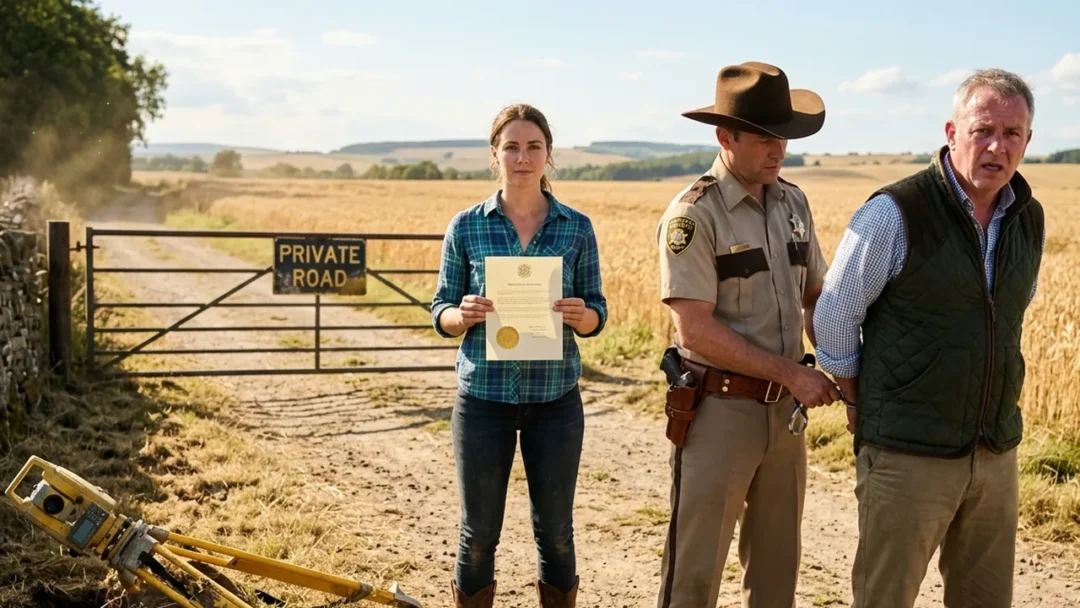
“Negative, Sarah,” Cooper said, his voice tight with warning. “Judge Hastings is in Seattle until tomorrow morning. No court order has been filed. But Commissioner Sterling just signed an ’emergency county road-clearing directive,’ claiming Thorne’s villa is an active wildfire shelter. They’re sending a commercial tow rig and three private security cruisers to cut your gate.”
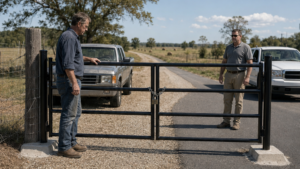
Sarah looked up the dark slope toward the locked iron gate at the crest of the hill. “Let them come, Hank. The road belongs to the farm. And the farm isn’t opening.”