The Quick Set Concrete Curing Under the Red Coupe Axles
CHAPTER 7: THE ROTARY BLADES
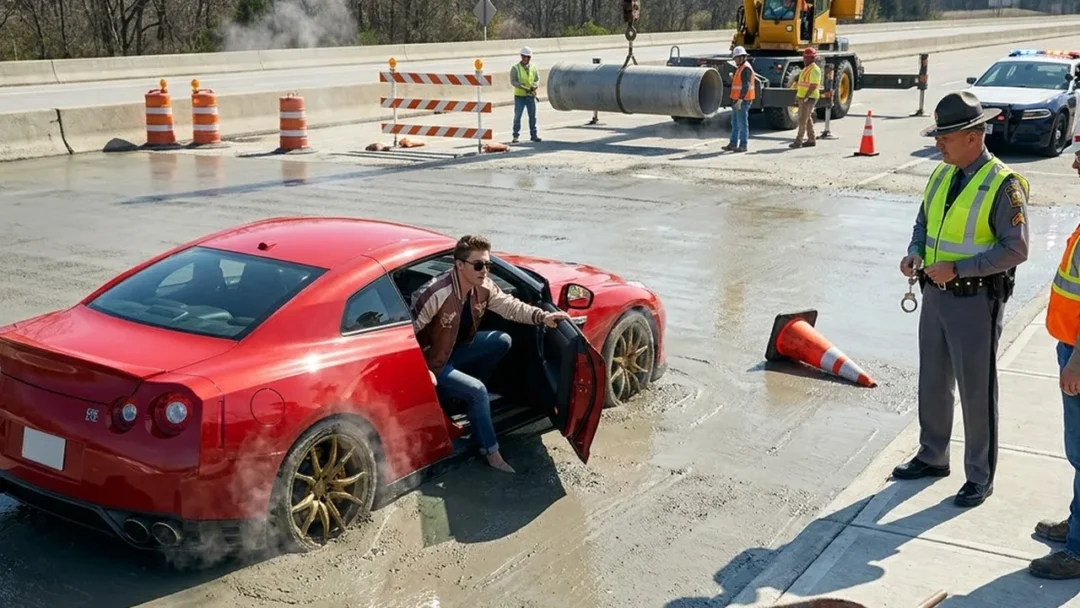
The trunk lid of the red coupe refused to yield to the electronic release button on the dash. The vehicle’s electrical system had shorted out when the battery cables in the lower front fender were crushed by the setting concrete.
“Bring up the Partner saw,” Calloway told the maintenance crew.
Two PennDOT workers advanced across the boardwalks, carrying a heavy gasoline-powered rescue saw equipped with a fourteen-inch diamond-carbide rotary blade. The two-stroke engine roared to life with a deafening, metallic scream that drowned out the sound of the rain and the roaring river in the gorge below.
“Cut the hinges,” Calloway ordered, holding a plastic safety shield. “Watch the fuel line.”
The diamond blade bit into the steel trunk seam behind the rear window. A shower of brilliant yellow and orange sparks sprayed into the damp mountain air, hissing violently as they hit the wet concrete deck. The operator leaned into the saw, the blade slicing through the double-walled sheet metal and reinforced hinge brackets in less than thirty seconds.
With a heavy steel pry bar, Calloway wedged the tool into the cut seam. He put his full weight against the handle. With a sharp groan of tearing steel, the trunk lid peeled upward, revealing the carpeted interior of the luggage compartment.
The trunk was packed with three heavy aluminum flight cases, sealed with military-grade rubber gaskets and padlocks. Tucked between the cases were two thick leather-bound ledgers, their pages bulging with receipts, contractor kickback vouchers, and signed delivery manifests.
Calloway reached in and lifted the top ledger. He opened the front cover under the shelter of his campaign hat.
Written in crisp black ink were the dates, account numbers, and personal signatures authorizing the diversion of three hundred thousand tons of substandard aggregate to four regional highway projects over a thirty-six-month period. At the bottom of every monthly distribution sheet was the countersignature of the approving municipal authority: Harlan Vance, General Counsel.
“Look at this, Captain,” Calloway said, handing the ledger across to Brennan.
Brennan glanced at the signatures, then turned his gaze toward Harlan Vance. The Chief Deputy DA stood motionless beside the wrecker, his face as gray and lifeless as the stone under his feet.
Deputy Collins slowly unclipped his badge from his lapel, took off his duty belt, and placed them both on the hood of the sheriff’s cruiser. “I didn’t know about this, Captain Brennan,” Collins said quietly. “He told me it was a custody dispute over county equipment.”
“Sit in your vehicle, Collins,” Brennan said. “The Attorney General’s investigators will take your statement.”
Brennan walked over to Harlan Vance, taking a pair of steel handcuffs from his own belt.
“Harlan Vance, you are under arrest for commercial bribery, corrupt organizations racketeering, tampering with public records, and conspiracy to defraud the Commonwealth of Pennsylvania,” Brennan said.
Harlan offered no resistance as Brennan twisted his arms behind his back and clicked the cuffs shut. As the steel ratchets locked, a sudden shudder shook the concrete deck beneath their boots.
From fifty feet upstream, an emergency siren on the culvert crane began wailing. The rain had breached the temporary earthen coffer dam upstream. A wall of brown river water, churned with mountain debris and broken logs, was surging down the ravine straight toward the open trench at Milepost Nineteen.