What Remained in the Silence
Part I — The Blank Window
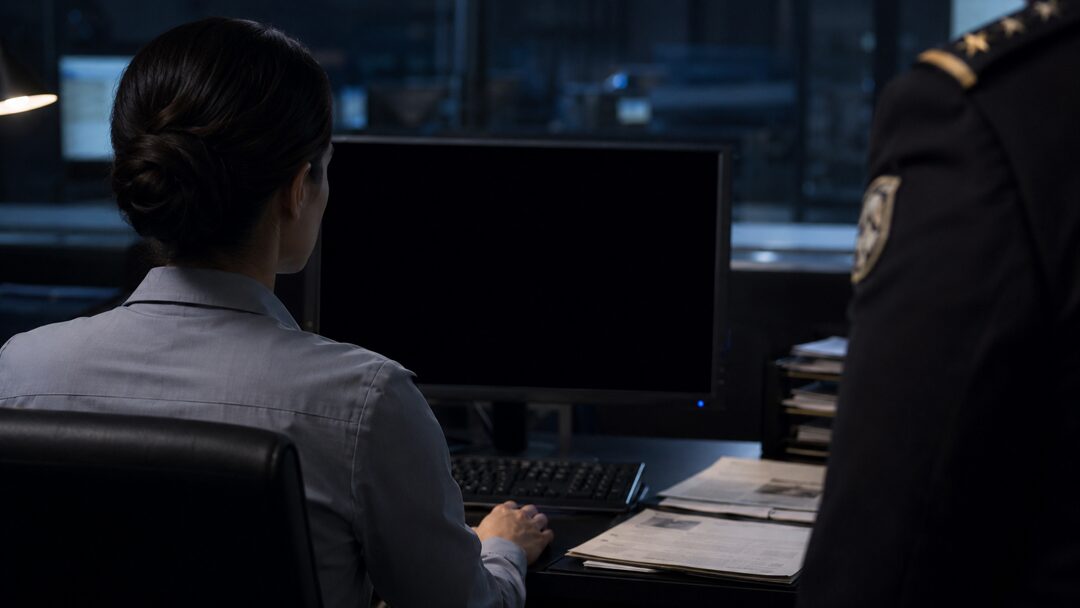
Emily Carter played the clip for the seventh time, and the screen stayed black.
No flash. No face. No last frame of courage to freeze and give to the family. Just a playback window as empty as a closed eye, and twelve point one four seconds of sound that made three officers in the room hold their breath.
Boots on gravel.
Wind snapping across an open mic.
A distant alarm rising and falling.
Someone saying, “Move, move—”
Then another voice, lower, almost swallowed by static.
Then the line everyone wanted to own.
“Don’t cut it.”
Or maybe not.
The room remained still after the audio ended. That was the strangest part. People usually moved when nothing appeared on a screen. They leaned back. They asked if the file was broken. They laughed nervously.
No one laughed here.
Colonel Mark Davis stood behind Emily’s chair with his arms folded, broad shoulders squared under a uniform that looked untouched by the long morning. His gray hair was cut close enough to make his face seem harder than it was. Or maybe it was exactly as hard as it needed to be.
“We need the story by noon,” he said.
Emily did not turn around.
“There isn’t enough here for a story, sir.”
“There’s enough for a memorial.”
“That’s not the same thing.”
The silence that followed was not empty. It had rank in it.
Emily kept her hands flat beside the keyboard. She had learned years ago that still hands made people think you were calm. She was not calm. She was counting streams, headers, timestamps, packet gaps, everything that could keep her from saying the wrong sentence.
The file was named SANDGLASS_RECOVERED_12.14.
Recovered was doing too much work.
Emily opened the technical panel again, though she already knew what it said. AAC audio. No video stream. No subtitles. No embedded stills. No readable frames. No visual metadata. No thumbnail. No camera stamp. No trace of a face, a location marker, a body, a weapon, a hand, a horizon, anything a person could point to and say, Here. This proves it.
She said it anyway, because saying it was part of the job.
“The file contains audio only. It does not confirm who is visible. It does not confirm where the camera was pointed. It does not confirm who gave the final line.”
Davis glanced at the other two officers. They looked away from him faster than they should have.
Emily knew that look. No one wanted to be the person who said absence mattered less than morale.
The clip had come from Operation Sandglass, an extraction near a border checkpoint no one outside the building was supposed to name. Staff Sergeant Brian Miller had not come back from it. Three others had. The public ceremony was in two days. The family had been told there was recovered footage.
Recovered footage.
Emily stared at the black window.
“Who told them that?” she asked.
Davis did not answer quickly enough.
“The phrase was used loosely.”
“It shouldn’t have been used at all.”
“Captain Carter.”
He said her rank softly. That was worse than when men shouted it.
She turned then. “Sir, if I write that Staff Sergeant Miller held the line, saved the team, and gave the final order, I’ll be inventing it.”
Davis looked at the black screen as if discipline alone could make it show something.
“Brian Miller did save that team.”
“I’m not disputing the outcome.”
“Then say the outcome.”
“The outcome isn’t the moment.”
His jaw shifted once. “The family doesn’t need a forensic report.”
“No,” Emily said. “They need us not to lie because it sounds kinder.”
One of the officers near the wall lowered his eyes.
Davis leaned closer, not enough to threaten, just enough to remind her where the ceiling was.
“You were assigned because you’re precise.”
“I’m being precise.”
“You were also assigned because you understand public language.”
Emily felt something old move under her ribs.
A different room. A different operation. A different report that had turned civilian confusion into clean necessity. She had helped write that one. Not the whole thing, just the line that made the worst part sound inevitable. It had been praised for clarity.
For two years, she had remembered the faces that line erased.
Now she looked back at the file.
Twelve seconds. No image.
A dead man people wanted to honor.
A family waiting.
A command that wanted the right shape.
Emily closed the metadata panel.
“I can write what the file supports,” she said.
Davis straightened.
“And what does it support?”
“That there is audio from a chaotic extraction. Multiple voices. Environmental noise. One ambiguous phrase. Nothing visual.”
“That won’t carry a ceremony.”
“It isn’t supposed to carry anything it can’t hold.”
He stared at her for a long moment.
Then he placed a folder beside her keyboard.
Inside was a draft statement. She did not need to read beyond the first sentence to understand why he had brought it.
In his final act of courage, Staff Sergeant Brian Miller ordered his team forward and held his position so others could survive.
Emily’s throat tightened.
It was beautiful.
That was the danger.
Davis tapped the page once.
“Noon,” he said.
Then he left her with the black window still open, the cursor blinking beside a story she had not agreed to tell.
Part II — The Brother Outside
Daniel Miller arrived forty minutes later wearing a civilian jacket too thin for the base wind.
Emily saw him through the glass before anyone announced him. He stood in the hallway with his shoulders hunched, not from cold exactly, but from being somewhere that had rules he did not know. A visitor badge hung crooked from his pocket. Around his wrist, twisted twice, were old dog tags on a dark chain.
He did not sit when she invited him in.
“Is he on it?” he asked.
No hello. No introduction. No gentle approach.
Emily closed the folder Davis had left on her desk.
“Mr. Miller—”
“Daniel.”
“Daniel. The file we recovered is audio only.”
His face changed in a small, terrible way. Not grief yet. Resistance to grief.
“They said footage.”
“I know.”
“So is he on it?”
“We can’t confirm that.”
“But you can hear him?”
“We may hear him.”
He stared at the computer. “Play it.”
Emily had played the clip seven times for people who wanted a statement. Playing it for Daniel felt different. It felt less like evidence and more like opening a door to a room where there might be nothing but air.
She turned the monitor slightly toward him.
Daniel watched the black playback window.
Emily pressed play.
Boots. Wind. Alarm.
“Move, move—”
A breath. Static.
“Don’t cut it.”
Then the clip stopped.
Daniel did not move.
He kept looking at the empty screen as if the image was late.
Emily waited. The waiting was worse than the audio.
Finally he said, “That’s it?”
“Yes.”
“That’s all you have?”
“Yes.”
“You’re sure there isn’t another file?”
“We’re checking every linked transfer.”
“But this is what they called footage?”
Emily did not answer.
Daniel laughed once, without humor, and stepped back from the desk. “So you brought me here to watch nothing.”
“No. I brought you here because you had been told something inaccurate.”
“You brought me here to correct a word?”
The accusation hit harder than she expected.
“I brought you here so no one else would use that word with you.”
He looked at her then. His eyes were restless, red at the edges, angry because anger gave him somewhere to put his hands.
“Did he say it?”
“We don’t know.”
“You keep saying that like it’s clean.”
“It’s honest.”
“It’s not clean for me.”
Emily had no answer for that.
Daniel turned toward the screen again. “Brian used to call me when he was deployed. Not often. Just enough that Mom would stop asking if he’d forgotten us. He always sounded like he was standing in the next room, pretending he wasn’t somewhere bad.”
He touched the dog tags on his wrist.
“I used to hate those calls.”
Emily said nothing.
“He’d say, ‘How’s work?’ like he wasn’t wearing a helmet. Like I was supposed to tell him about a busted water heater while he was out there doing whatever he couldn’t talk about. I told him once not to call if he was only going to sound half there.”
Daniel swallowed.
“Last thing I said to him was in a text. Three words. Stop disappearing, man.”
The room tightened around that sentence.
Emily knew better than to comfort people with language that made her feel useful.
Still, something in her softened against her will.
“You didn’t know,” she said.
Daniel looked at her sharply. “Don’t.”
She stopped.
He pointed at the screen. “Play it again.”
Emily hesitated.
“Please,” he said, and that was worse than the anger.
She played it again.
This time Daniel closed his eyes.
Boots. Wind. Alarm.
“Move, move—”
Static.
“Don’t cut it.”
The clip ended.
Daniel opened his eyes. “That sounds like him.”
“It might be.”
“But you won’t say it.”
“I can’t say what I can’t confirm.”
He nodded slowly, as if he was learning the shape of her and did not like it.
“You talk like a locked door.”
Emily almost flinched.
He moved toward the exit, then stopped.
“If they use him in some clean little speech,” he said, “and you know it’s not proven, that’s on you too.”
When he left, the dog tags at his wrist made a small sound against the doorframe.
Emily sat alone for a moment after he was gone.
Then she opened Davis’s draft again.
The first sentence still shone with terrible usefulness.
In his final act of courage…
She selected the line.
Deleted it.
The empty page looked better.
Not enough.
Part III — The Man Who Wouldn’t Answer
Joseph Lee came in just after lunch and chose the chair farthest from the speaker.
That was the first thing Emily noticed.
He was lean, hollow-eyed, with his sleeves rolled to the same exact height on both forearms. A faded medical tattoo disappeared under the edge of his watch. He looked like a man who had trained his body to stay ready even in rooms where nothing was happening.
“Sergeant Lee,” Emily said.
“Joseph is fine.”
He sat but did not relax. His eyes went once to the black playback window and then away.
Emily kept her voice even. “You were on the extraction team.”
“Yes.”
“You were close enough to Staff Sergeant Miller to hear his comms?”
Joseph’s hand moved toward his pocket, then stopped.
“Sometimes.”
“Were you close enough during the final twelve seconds?”
His mouth tightened.
Davis had warned her before Joseph arrived. He’s been through enough. Don’t interrogate him like an investigation.
But every story was an investigation if someone wanted it clean.
Emily pressed play.
Joseph looked at the floor.
Boots. Wind. Alarm.
“Move, move—”
Static.
“Don’t cut it.”
The clip ended.
Emily watched his face.
No tears. No dramatic break. Only one breath held a second too long.
“Is that Brian Miller?” she asked.
Joseph rubbed a thumb along the seam of his pants.
“I don’t know.”
“Do you recognize the final phrase?”
“No.”
“Were you present when it was said?”
He looked at her then.
There it was. Not guilt exactly. Not fear exactly. Recognition fighting discipline.
“I don’t know.”
Emily let the silence sit.
Joseph looked toward the door. “Colonel Davis said this was for the memorial.”
“It is.”
“Then write that he did his job.”
“That’s not the question.”
“It’s the only answer that helps anybody.”
Emily leaned back slightly.
“Do you have something of his?” she asked.
Joseph went still.
“In your pocket.”
His face closed.
“No.”
Emily did not challenge him. She had learned that cornering a person too early made them defend the lie instead of face the truth behind it.
He stood.
“We were ordered to move,” he said.
“I didn’t ask that.”
“No. But you were going to.”
He reached the door, then turned back, eyes sharp now.
“You want a line that makes sense? Here it is. Brian Miller stayed on comms. People came home. That’s true.”
“Is it complete?”
Joseph gave a thin, bitter smile.
“Nothing complete fits in twelve seconds.”
After he left, Emily replayed the clip again.
Not to hear Brian. Not even to hear the final phrase.
This time she listened underneath it.
At first there was only the alarm and the wind, the rough scrape of sound against damaged audio. She filtered frequencies, pulled the low band down, brought the midrange forward, then stopped herself before she began pretending precision meant certainty.
Still, something changed.
Under the final phrase, just before the consonant snapped, there was another voice.
Not clear.
Not usable.
But present.
Emily isolated the final two seconds and played them at half speed.
“Don’t cut it.”
Again.
“Don’t cut it.”
Again.
The second voice dragged beneath the first like a shadow.
Emily’s hands stayed still, but her pulse did not.
She changed the filtering by a fraction.
Played it again.
This time the line did not sound like “Don’t cut it.”
It sounded like “Don’t cut him.”
Emily removed her headphones.
The room was suddenly too quiet.
She sat there with the black window open, understanding how fast meaning could turn.
A file about missing footage had become a file about a body no one could see.
A final order had become a plea.
Or an accusation.
Or nothing certain at all.
That was the cruelty of it.
Unclear did not mean harmless.
Part IV — The Other Line
Daniel came back before Emily asked him to.
He stood in her doorway with his badge turned backward and said, “Someone told me there’s an enhanced version.”
Emily looked up from the waveform.
“Who told you that?”
“Does it matter?”
“Yes.”
“No one who’ll admit it.”
His face looked worse than it had that morning. Not more broken. More sharpened.
Emily should have asked him to wait. She should have called Davis. She should have followed procedure, because procedure was often just fear in a clean uniform, but sometimes fear was wise.
Instead she said, “You need to understand something before I play it.”
Daniel stepped inside.
“If I could prove anything, I would tell you. I can’t. The audio is compromised. There may be overlapping voices. There may be distortion.”
“Play it.”
“Daniel—”
“Don’t soften nothing and call it care.”
The line landed too close.
Emily turned the speaker down.
Then she played the altered section.
Boots.
Wind.
Alarm.
“Move, move—”
The static surged.
“Don’t cut—”
And beneath it, lower, torn almost beyond language:
“—him.”
Daniel’s face emptied.
Emily stopped the playback.
“No,” he said.
“It is not confirmation.”
“No.”
“It could be distortion.”
“No, don’t do that.”
“I’m telling you the limits.”
“You’re hiding behind them.”
“I am trying not to give you a false certainty.”
He stepped closer to the desk. “Did they leave him?”
Emily did not answer.
His voice rose. “Did they cut him loose?”
“We do not know that.”
“Then find someone who does.”
The door opened behind him.
Davis stood there.
For a second, no one spoke.
Then Davis looked at Emily, not Daniel.
“That version was not cleared for family review.”
Daniel turned slowly. “Family review?”
“Mr. Miller—”
“Don’t Mr. Miller me. Was my brother alive when they moved?”
Davis’s expression changed by less than an inch. It was enough.
“Your brother’s actions saved lives.”
“That is not what I asked.”
“No,” Davis said. “It’s what I can answer.”
Daniel laughed again, that same empty sound from the morning. “You people practice that? Saying around things?”
Davis’s eyes hardened.
“Grief does not entitle you to unfinished conclusions.”
Daniel stepped toward him, but Emily stood first.
“Colonel,” she said, “the statement cannot say the recovered file captures a clear final act.”
Davis did not look away from Daniel.
“A ceremony is not a courtroom.”
“No,” Emily said. “That’s why it has to be careful.”
Davis turned to her then. “Careful can still be cruel.”
“So can certainty.”
For the first time that day, Davis looked tired.
Not defeated. Not guilty. Tired in a way rank could not polish.
“Captain Carter, outside.”
Emily followed him into the hall.
He did not raise his voice.
“You think unfinished interpretations serve truth.”
“I think false ones don’t.”
“You put that phrase in his brother’s head.”
“I played what is there.”
“You played what you made audible.”
The distinction struck harder than she wanted it to.
Davis stepped closer.
“I have seen families destroyed by images they begged for. I have seen men judged by twelve seconds that left out the hour before and the minute after. You think restraint means refusing the story. Sometimes restraint means refusing the image.”
Emily studied him.
“What image?”
Davis went still.
The hallway hummed softly above them.
Emily said it again, quieter. “What image, sir?”
Davis looked past her toward the closed door, where Daniel waited with the black screen and all its possible meanings.
Then he said, “Some images don’t give truth. They just give people something to hate.”
Emily felt the sentence move through her like cold water.
That night, after Davis left the building, she went back into the transfer logs.
She did not expect to find much. Systems were good at hiding what powerful people needed hidden, and she was not an investigator with a warrant. She was a media analyst with credentials just wide enough to make herself unwelcome.
But the file had been handled quickly. Too quickly.
Original device upload. Secure transfer. Archive copy. Review export.
The archive copy was locked.
The review export was not.
She opened the chain-of-custody record and stared at the line until the meaning settled.
The original upload had included two streams.
Audio and video.
The file on her desk did not.
The review export had been generated manually from Davis’s office terminal at 0318 hours.
Emily sat back.
The blank screen was not just a failure.
Someone had made it blank.
Part V — The Approved Version
The approved script came at 0700 the next morning, printed on heavy paper and placed on Emily’s desk by Davis himself.
He did not email it.
That mattered.
People emailed drafts. They hand-delivered decisions.
Emily read the first paragraph while he stood across from her.
Today we honor Staff Sergeant Brian Miller, whose final act of courage was captured in recovered mission footage. In those final moments, he ordered his team forward and remained behind so others could return.
Her stomach tightened.
“Recovered mission footage,” she said.
Davis’s face did not change.
“It’s the language command approved.”
“It’s false.”
“It’s simplified.”
“No. Simplified means less detail. This says there is visual evidence.”
“The public doesn’t parse file streams.”
“His brother does.”
Davis looked toward the hallway.
Daniel was out there already, sitting on a bench beneath a framed photograph of men in dress uniforms. He had not asked to come in. He had only asked whether Emily would tell him before anyone else lied into a microphone.
Joseph stood at the far end of the corridor near a vending machine, not buying anything. His right hand was in his pocket.
Emily knew what he was holding now.
Davis lowered his voice.
“You found the export.”
“Yes.”
“And what do you think you found?”
“That the visual stream was removed after transfer.”
“By me?”
“I didn’t say that.”
“But you want to.”
Emily folded the script once, sharply.
“I want the original file.”
“You can’t have it.”
“Does it still exist?”
Davis did not answer.
For a moment, she hated him.
Then she saw the shape of the hatred and distrusted it.
That was the trap of missing images. They asked to be filled.
Davis placed both hands on the back of the chair opposite her.
“You think I’m protecting myself.”
“Are you?”
“I’m protecting a unit that came home missing one man and carrying three others. I’m protecting a family from seeing one frame and living inside it forever. I’m protecting Miller from being turned into an argument by people who weren’t there.”
“And who protects him from being turned into a speech?”
Davis closed his eyes.
It was brief, but Emily saw it.
When he opened them, his voice was lower.
“You weren’t there.”
“No.”
“Then be careful what you call courage.”
Emily looked down at the script.
“That’s what I’ve been saying.”
The door opened.
Joseph stepped in without knocking.
Davis turned. “Sergeant—”
Joseph ignored him and walked to Emily’s desk.
His face looked worse in daylight.
He took something from his pocket and placed it beside the keyboard.
A coin. Heavy, worn at the edge, stamped with a unit crest Emily knew better than to name. It caught the overhead light and held it.
Emily did not touch it.
Joseph said, “Brian gave me that before we rolled out.”
Davis’s jaw tightened. “This isn’t necessary.”
Joseph kept his eyes on the coin.
“He said, ‘Bring everybody back, even if it isn’t pretty.’”
Daniel appeared in the doorway.
No one had called him.
No one told him to leave.
Joseph saw him and seemed to shrink without moving.
Daniel stared at the coin.
“Was he alive?” Daniel asked.
Joseph’s hand trembled once.
Emily thought he would say nothing. Another silence. Another blank space waiting to be filled by someone stronger or crueler.
Instead, Joseph said, “Yes.”
Daniel’s face broke open, but no sound came out.
Joseph added quickly, “I don’t know for how long.”
“Could you reach him?”
“I was close.”
“How close?”
Joseph looked at Davis, then back at Daniel.
“Close enough to hear him.”
Daniel stepped inside the room.
“That’s not what I asked.”
Joseph’s eyes shone, but he did not cry.
“I was close enough to try. Not close enough to save him without losing the others.”
Daniel absorbed that like a physical blow.
Emily wanted to look away. She did not.
Joseph’s voice fell.
“We were ordered to move. I obeyed.”
Daniel whispered, “And my brother?”
Joseph pressed his lips together.
“He stayed on comms.”
“That’s all?”
Joseph nodded once, and it cost him.
“That’s what I can say.”
Daniel looked from Joseph to Davis to Emily.
The room had become too small for every version of mercy.
Daniel picked up the coin, then immediately set it down, as if it burned. “You had this?”
Joseph nodded.
“All this time?”
“I didn’t know how to give it back.”
Daniel laughed under his breath. “You start with your hand.”
No one moved.
Then Davis slid the approved script toward Emily.
“The recording is in twenty minutes,” he said.
His voice had changed. Not softer. Less certain it would be obeyed.
Emily looked at the paper.
Then at the black playback window still minimized at the bottom of her screen.
Then at Daniel, who wanted the truth to become a shape he could hold.
At Joseph, who wanted not to be the shape of it.
At Davis, who wanted order to be kindness.
Emily picked up the script.
For one second, everyone watched her as if the story already belonged to her.
She tore the first page in half.
Not dramatically. Not loudly.
Just enough that it could not be read.
Davis did not stop her.
Part VI — What the File Could Hold
The memorial room had a lectern, a flag, three rows of chairs, and a camera pointed at an empty place where certainty was supposed to stand.
Emily had written her final statement by hand.
It was shorter than the approved version.
That made it harder to hide inside.
Davis stood at the back of the room. Joseph sat near the aisle, shoulders rigid, eyes fixed on the floor. Daniel stood rather than sat, one hand closed around the dog tags at his wrist.
Emily stepped to the lectern.
The red recording light came on.
For a moment she saw another room from years before. Another statement. Another clean sentence that had helped turn confusion into policy. She remembered how praised she had felt for making something difficult sound resolved.
This time, she let the difficulty stay.
“Staff Sergeant Brian Miller served during Operation Sandglass,” she began. “During the extraction, his team came under severe pressure near the final transfer point. Three members of that team returned because the group continued moving under his communication and the communication of others on the line.”
Davis did not move.
Emily continued.
“A twelve point one four second recovered file exists from those final moments. The file is audio only. It contains no readable video track, no subtitles, no visible faces, and no visual frames that confirm exactly what happened.”
Daniel’s eyes lifted to her.
Emily kept going.
“There are voices on the recording. There is wind, movement, an alarm, and a phrase that cannot be confirmed with certainty. Because the visual record is unavailable, we will not describe what it does not show.”
The room seemed to hold its breath.
Emily looked down once at the handwritten page.
Then she stopped reading from it.
“What can be said is this: Brian Miller remained connected to his team in the final moments we can verify. Others survived the extraction. The people who returned did so carrying his presence with them, and not one of them has called that survival simple.”
Joseph closed his eyes.
Emily’s voice stayed steady.
“Before the operation, Staff Sergeant Miller gave a coin to the medic beside him and said, ‘Bring everybody back, even if it isn’t pretty.’”
Daniel pressed the dog tags hard against his palm.
“That sentence is not from the recovered file,” Emily said. “It is not being presented as a final line. It is being offered because a man who knew him heard it, carried it, and returned with it.”
Davis looked at Joseph.
Joseph did not look away from the floor.
Emily finished with the only sentence she knew would not betray the blank window.
“We honor Brian Miller not by pretending to see what cannot be seen, but by refusing to make his life smaller than the truth we have.”
The red light stayed on for one second after she stopped speaking.
Then it went dark.
No one applauded.
It was not that kind of room.
Davis walked to the lectern afterward. Emily expected discipline. Reassignment. A quiet professional ending dressed as procedure.
He held out his hand for the pages.
She gave them to him.
He looked at the handwriting, then at her.
“You understand this will make some people angry.”
“Yes, sir.”
“It will satisfy almost no one.”
“I know.”
Davis folded the pages once.
Then he said, “Send it as recorded.”
Emily did not thank him.
He did not ask to be thanked.
Daniel waited until Davis had gone before he approached her.
His face looked drained of the fight that had carried him through the last day. Without it, he seemed younger.
“Can I hear it again?” he asked.
Emily knew which it he meant.
Joseph stood by the door, one hand closed around nothing now.
Emily led Daniel back to the media office.
No ceremony followed them. No official witness. No approved language.
Just the three of them and the black playback window.
Daniel sat this time.
Emily placed the small speaker on the desk.
Joseph took the coin from his pocket, hesitated, then held it out.
Daniel looked at it for a long time before taking it.
No apology passed between them.
Maybe one day there would be words. Maybe not.
Emily opened the file.
The same name appeared.
SANDGLASS_RECOVERED_12.14.
The same black window.
The same empty frame.
Daniel nodded.
Emily pressed play.
Boots on gravel.
Wind across an open mic.
A distant alarm.
“Move, move—”
A breath.
Static.
The final phrase came and went, still refusing to become one thing.
Then silence.
Daniel did not ask her to play it again.
He held the coin in his right hand and Brian’s dog tags in his left, as if one object belonged to what had returned and the other to what had not.
After a while, he placed the coin beside the speaker.
The metal touched the desk with a soft, definite sound.
“That’s enough to know he was there,” Daniel said.
Emily did not answer.
Joseph lowered his head.
Outside the narrow office window, the base moved on in its clean lines and scheduled orders. Doors opened. Boots passed. Phones rang. Somewhere, another statement was already being drafted about something no one fully understood.
But in that room, for twelve seconds, no one improved the silence.
No one filled the black screen.
No one made the missing thing useful.
They let it remain what it was: incomplete, painful, and still real.
And for the first time since the file had landed on Emily’s desk, the absence did not feel empty.
It felt witnessed.