The Desert Sandstorm Gale And The Ancient Stone Aqueduct Canal
CHAPTER 7: THE STONES OF SAN GABRIEL
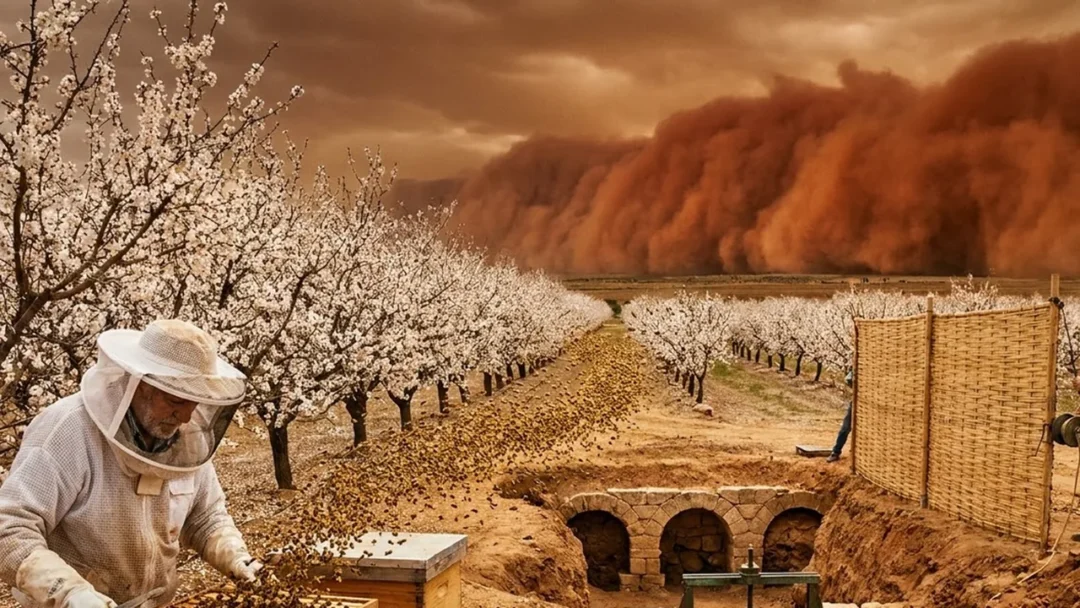
Elijah stood at the edge of the scoured trench, his jaw dropping in utter bewilderment.
Ten feet below the normal desert surface, the wind had uncovered a magnificent, monumental subterranean structure constructed from massive, precision-cut blocks of dark gray Eagle Mountain granite.
The stonework was ancient, exquisite, and unmistakably engineered. It was a dual-vaulted subterranean hydraulic aqueduct canal, five feet wide and six feet deep, constructed with classic Roman-style keystones and waterproof lime-pozzolana mortar that had survived untouched by decay beneath the dry desert sands for over a century.
“What is that?” Mateo whispered, slowly climbing down the sandy bank into the trench. “This isn’t an irrigation ditch. Look at the masonry… it’s hand-chiseled ashlar granite.”
The lost aqueducts of the Colorado Desert were the subject of enduring frontier legends dating back to the California Gold Rush. In the late nineteenth century, prior to the construction of the Hoover Dam and the All-American Canal, speculative mining syndicates and Jesuit mission outposts had invested millions of dollars in private capital to tap the hidden perched aquifers of the Eagle and Orocopia mountains. Utilizing immigrant stonemasons from northern Italy and Spain, they had hand-chiseled gravity-fed conduits through solid granite passes, designing hydraulic systems intended to turn the barren desert into a fertile empire decades before modern heavy machinery existed.
Elijah jumped down beside him, running his fingers across the cold, smooth face of a massive granite lintel. Embedded in the center of the stone arch was a heavy, circular valve assembly cast from solid marine bronze, tarnished to a deep, lustrous emerald patina by time.
Elijah pulled a cotton rag from his pocket, scrubbing away the caked red silt from the bronze casting.
Raised in bold, elegant lettering on the bronze faceplate was an inscription:
ACUEDUCTO DE SAN GABRIEL
COMPAÑÍA DE AGUAS DEL DESIERTO
ESTABLISHED 1890
CAPACITY: 4,000 MINER’S INCHES
Mateo’s breath caught in his throat. “The San Gabriel line… My grandfather used to tell stories about it when I was a boy in the nineteen-forties. In the late eighteen-eighties, a syndicate of Spanish engineers and Jesuit missionaries spent five years carving a subterranean gravity-fed stone aqueduct from the high mountain springs of the Eagle Range all the way down to the desert rail line. In eighteen-ninety, a massive flash flood washed down the canyon, burying the entire aqueduct beneath twenty feet of alluvial gravel. Everyone thought the line was destroyed. Everyone thought it was a myth!”
Elijah pressed his ear against the cold bronze casting of the valve.
He froze.
Beneath the solid bronze and the thick granite blocks, a deep, continuous, vibrating roar echoed through the stone—the unmistakable, powerful sound of millions of gallons of high-pressure, icy cold mountain water rushing through the subterranean channel, waiting behind the closed sluice gate like a caged giant.