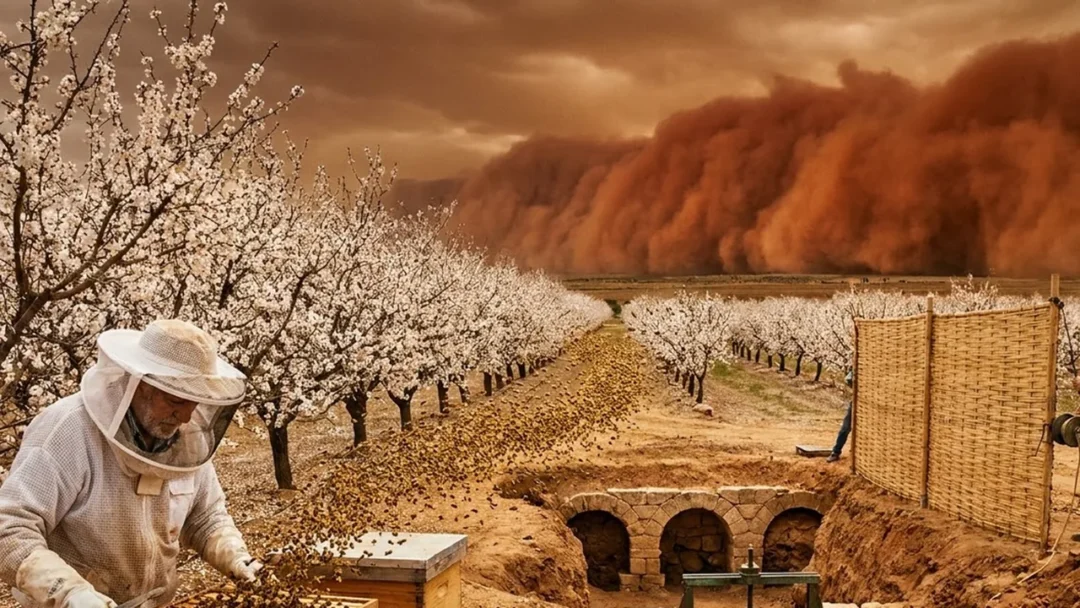
The Desert Sandstorm Gale And The Ancient Stone Aqueduct Canal
CHAPTER 6: THE SCOURED PERIMETER
At 11:15 AM, the ferocious wind died as abruptly as it had arrived.
The red dust settled rapidly, dropping from the upper atmosphere like fine crimson snow, coating the rocks and roads in a two-inch layer of soft, powdery silt. The brilliant California sun broke through the clearing sky, washing the Chuckwalla Valley in clean, harsh desert light.
Elijah pushed open the heavy tractor door, stepping down onto the red-dusted soil. The air was cool, clean, and completely still.
The agricultural insurance architecture of the desert Southwest was notoriously punitive toward independent family operators. Under standardized multi-peril crop insurance policies, catastrophic sandstorm damage was frequently classified under ambiguous ‘act of God’ exclusions unless documented by certified meteorological stations located within five miles of the parcel. For small growers like Mateo Alvarez, who operated without the expensive legal departments of multi-national corporate conglomerates, an uncertified disaster meant an immediate forfeiture of seasonal operating lines, the forced sale of equipment at county auctions, and the inevitable abandonment of multi-generational land holdings.
Mateo and Maria scrambled down behind him, running immediately toward the nearest almond row.
Mateo stopped under row one, his eyes filling with tears of pure, overwhelming relief.
The white almond blossoms were there.
Millions of immaculate, snowy-white flowers clung to the branches, unblemished, intact, their delicate yellow stamens completely untouched by sand. The woven bamboo windbreak had done its work with miraculous aerodynamic perfection; ninety-eight percent of the heavy, destructive sand had been vaulted harmlessly over the canopy, leaving the five-hundred-acre bloom pristine and alive.
Elijah sprinted down the line of Langstroth hives. He knelt beside box one, pulled the brass locking pin, and slid the ventilation gate open.
A soft, musical buzz erupted from the entrance. Within seconds, hundreds of golden honeybees tumbled out onto the landing board. They tested the air with their antennae, stretched their transparent wings, and launched into the sunlit sky, resuming their joyous pollination dance among the white blossoms as if the apocalyptic storm had never happened.
“We did it…” Mateo laughed, wiping red silt from his face with a trembling hand. “We saved the bees. We saved the whole damn harvest.”
“Mateo!” Maria called out from the eastern fence line. “Come look at the extraction barn!”
The extraction barn had been constructed in nineteen-thirty-two during the depths of the Great Depression by Mateo’s grandfather, using reclaimed red fir bridge timbers and hand-forged iron spikes salvaged from the abandoned Tonopah and Tidewater railroad. For nearly a century, the barn had served as the spiritual heart of the ranch, where tens of thousands of gallons of pale amber desert wildflower and almond honey had been extracted using antique hand-cranked stainless-steel centrifugal drums. The sudden loss of its tin roof was an emotional wound, but the ancient timbers of the walls stood rock-solid, anchored to the bedrock that now guarded a far greater secret.
Elijah and Mateo hurried across the road to the damaged outbuilding. The tin roof was gone, but it was not the missing metal that had caught Maria’s attention.
The extreme localized microburst that had ripped the roof away had acted like a colossal pneumatic excavator. Along the eastern foundation of the barn, the hurricane-force winds had scoured away ten feet of dry desert topsoil, clearing an eighty-foot-long trench that dropped down to the ancient bedrock of the canyon wash.
And resting in the bottom of that newly exposed trench was something that did not belong in the modern desert.