The Four Finger Pushup And The Magnetic Chess Hustler Trap
CHAPTER 5: THE FIFTH AVENUE LEDGER
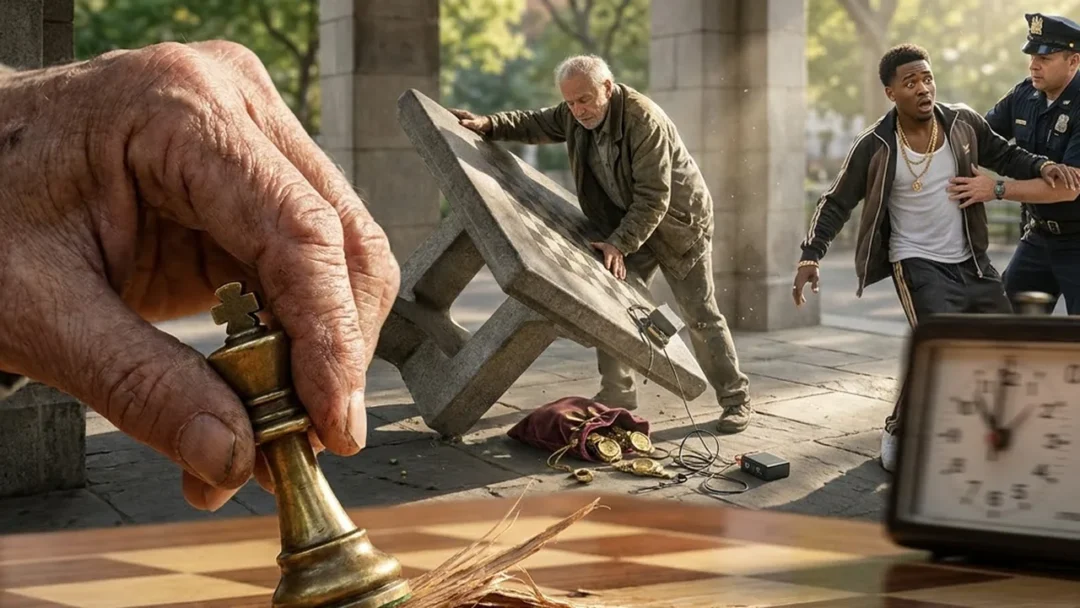
The response from the NYPD’s Major Case Squad and the Midtown Robbery Division was instantaneous. Within fifteen minutes, three marked cruisers and an unmarked black sedan had cordoned off the southwestern perimeter of the chess pavilion with yellow crime scene tape.
Detective Frank Russo—a seasoned twenty-year investigator with the Manhattan Diamond District Task Force—knelt on the pavement, using forensic tweezers to inventory the nine gold wristwatches and the loose diamonds into sealed evidence bags.
“Mr. Varga,” Detective Russo said, looking up at the elderly grandfather with profound respect in his dark eyes. “You have no idea what you just cracked open. On Wednesday morning at ten o’clock, three armed men in courier uniforms held up a boutique luxury jeweler on Fifth Avenue, clearing out two display cases before fleeing on motor scooters through Central Park. We recovered the scooters in Harlem, but the jewelry vanished into thin air.”
Detective Russo stood up, holding a tablet terminal displaying high-resolution surveillance photographs of the robbery suspects.
“Damon Cross wasn’t just a park hustler,” Russo explained, his voice carrying the satisfaction of an investigator closing an impossible file. “He was the primary drop-broker for the West Midtown fencing network. The thieves dropped the stolen luxury goods to Damon in the park disguised as gym bags, and Damon taped the loot beneath his designated chess table while running his blitz games, waiting for an international transport courier to collect the package during the evening rush hour.”
Russo walked over to Damon, who was sitting handcuffed on a park bench, weeping hysterically into his knees.
Russo pulled a high-end encrypted smartphone from Damon’s pocket, inserting a forensic hardware key into the charging port. Within seconds, the terminal decoded an active messaging thread with an offshore buyer based in Antwerp:
“Nine watches and the five-carat stones secured under table eight. Pickup scheduled at the fountain at 15:45. Bring thirty thousand in clean cash.”
Detective Russo checked his watch. It was three-thirty-five.
“Ten minutes,” Russo said, looking at Officer Kane and his tactical team. “The buyer is walking into the park right now. Set the perimeter around the fountain. Nobody draws a weapon until the money changes hands.”
The commercial dynamics of the Manhattan diamond and luxury watch trade represent an ecosystem of extraordinary security protocols and acute physical vulnerability. Along the single block of West Forty-Seventh Street known as the Diamond District, over twenty-four billion dollars in precious gems and unmounted stones change hands annually, largely through informal verbal contracts and handshakes backed by traditional guild honor. The vulnerability of this high-density wealth lies in its transport corridors: couriers transporting inventory between cutting workshops, appraisal laboratories, and Fifth Avenue retail showcases must navigate crowded urban sidewalks where distraction thefts and coordinated armed grabs can occur in fractions of a second. Fencing syndicates utilize street-level operators like Damon Cross to break the evidentiary chain, stashing stolen goods in public parks where surveillance cameras are obscured by tree canopies until transport couriers can smuggle the assets through international container ports.
Arthur bent his neck, adjusting the brass jewelers loupe that he kept tucked inside the lapel pocket of his woolen vest. Beneath the glaring precinct fluorescent tubes, the polished sapphire crystals and brushed platinum bezels took on an unmistakable diagnostic glow. For over forty-two years, Arthur Vance had operated a cramped bench workshop on the fourth floor of a pre-war brownstone along West 47th Street. He knew the distinct tooling marks of Geneva striping, the precise chamfering of Glashütte plates, and the chemical composition of antique blued steel screws. Marco Ramos’s so-called street hustle was not merely a localized parlor scam; it was the final, desperate retail branch of an organized fencing corridor that had puzzled Manhattan South detectives for over eighteen months.
“Look at the balance cock on this reference 5170 chronograph,” Arthur murmured, turning the piece under the magnification of his loupe while Kowalski watched with growing admiration. “The regulator arm has been tampered with by an amateur using a standard jewelers screwdriver rather than an anti-magnetic brass blade. See those microscopic striations along the column wheel bridge? Whoever opened this case did not have a proper casing ring. They forced the caseback using a friction ball, tearing the perimeter gasket. And observe the eight-digit serial engraved into the case rim: 5892104. That watch did not come from a street tourist. It was cataloged in the private collection of Evelyn Montgomery following the Fifth Avenue penthouse break-in last November.”
Kowalski leaned forward, his pencil racing across the margins of the blue precinct intake ledger. “Montgomery’s insurance syndicate paid out nearly four hundred thousand dollars on that claim. We suspected an inside job involving the private maintenance staff, but the property vanished into thin air. Every licensed pawn shop between Battery Park and Harlem was flagged, yet nothing surfaced on the automated databases.”
“Because Marco Ramos never intended to take them to a pawn shop,” Arthur explained softly, setting the chronograph down onto a clean velvet tray. “Pawn brokers file electronic manifests with the municipal registry every evening at midnight. Marco’s modus operandi was far more insidious. He operated in plain sight under the canopy of Washington Square. He targeted wealthy amateur chess enthusiasts, hedge fund managers strolling south from Midtown, and European tourists carrying thick wallets. When he couldn’t hustle them out of two hundred dollars with his magnetic board, his runners tracked them through the park, noting their wristwear. If a mark lost his composure or flashed an expensive piece, Ramos had an associate follow them to the subway stairs or the outdoor cafes along MacDougal Street.”