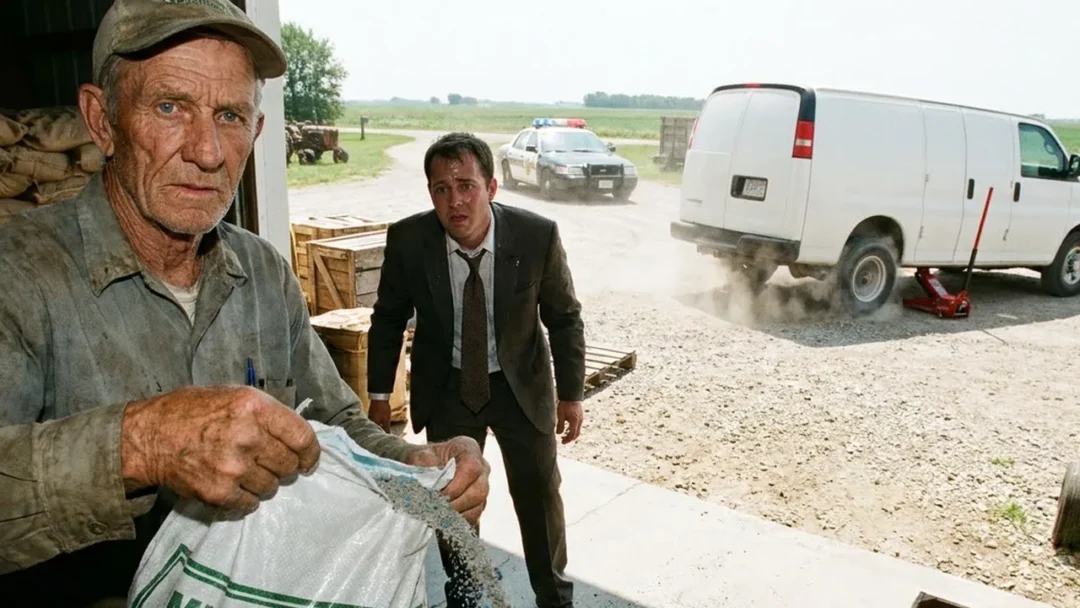
The Hundred Kilo Harvest Walk And The Counterfeit Fertilizer Scandal
CHAPTER 7: THE RESTITUTION OF THE VALLEY
By Friday afternoon, the immediate agricultural crisis that had threatened Black Hawk County had transformed into an unprecedented triumph of rural justice.
Under emergency court orders issued by the federal district magistrate in Cedar Rapids, the sixty-four thousand dollars in cashier’s checks seized from Julian Vance’s glove compartment was formally voided and returned to the four victimized family farmers in Benton and Tama counties. The federal receivership seized the syndicate’s offshore bank accounts, establishing a four-million-dollar restitution fund to compensate regional cooperatives for freight delays.
More importantly, the State Department of Agriculture coordinated with legitimate domestic mineral producers in Saskatchewan, expediting forty unit-train railcars of certified, ninety-nine-percent pure Canadian potash directly to the Cedar Valley cooperative sidings under emergency state rail priorities.
At four o’clock on Friday, the cooperative yard was filled with the grateful chatter of dozens of local farmers who had gathered for the emergency board meeting.
Luke Bradley and Seth Miller stood beside the loading dock, their faces flushed with deep, humble respect as Caleb Thorne walked up the wooden ramp. Luke stepped forward, extending his hand, his voice thick with genuine emotion.
“Mr. Thorne,” Luke said, looking the elderly farmer in the eye. “We owe you an apology. We laughed at your old-school ways. We thought strength was how much iron you could bench-press in an air-conditioned gym. If it wasn’t for your hands… and your shoulder… half the farms in this valley would have gone bankrupt by harvest.”
Seth nodded vigorously, pointing at his own running shoes. “Teach us, Mr. Thorne. Teach us how to carry weight without breaking. Teach us how to read the seed, the soil, and the minerals. We want to learn how to be real farmers.”
Caleb looked at the two young men. A gentle, knowing smile broke across his sun-baked face, softening the deep lines around his eyes. He reached out, his calloused, leathery palm clasping Luke’s hand in a grip that felt like unyielding mountain oak.
“The gym builds the paint, boys,” Caleb said softly. “The land builds the iron underneath. If you want to learn, be here tomorrow morning at five o’clock. We have five hundred bags of real Canadian potash to load, and the oak plank is waiting.”
The cooperative board of directors then called Caleb to the front of the pavilion.
With a unanimous, standing vote, the board presented Caleb with an official engraved bronze plaque, permanently appointing him as the Chief Agricultural Quality and Soil Inspector for the entire Cedar Valley Agricultural District, granting him full statutory authority to inspect and reject any commercial input entering the county railheads.
The administrative aftermath of the counterfeit bust reverberated across the entire Midwestern agricultural exchange. In Des Moines, the state secretary of agriculture ordered immediate random chemical inspections of every commercial fertilizer transport operating along the Interstate 80 and Interstate 35 corridors. State university extension offices issued emergency bulletins to thirty thousand corn and soybean producers, providing illustrated guides detailing how to conduct simple water-dissolution tests in a coffee cup to detect insoluble construction silt before signing delivery vouchers. What had begun as an isolated incident at a rural loading dock had triggered a comprehensive overhaul of state grain and chemical supply-chain protocols, closing regulatory loopholes that predatory syndicates had exploited for over a decade.