The Hundred Kilo Harvest Walk And The Counterfeit Fertilizer Scandal
CHAPTER 6: THE RAID ON THE RIVER WAREHOUSE
Deputy Kowalski did not hesitate. He unhooked his radio mic, switching directly to the statewide Law Enforcement Emergency Net, contacting the Iowa Department of Public Safety and the Criminal Investigation Division of the Department of Agriculture.
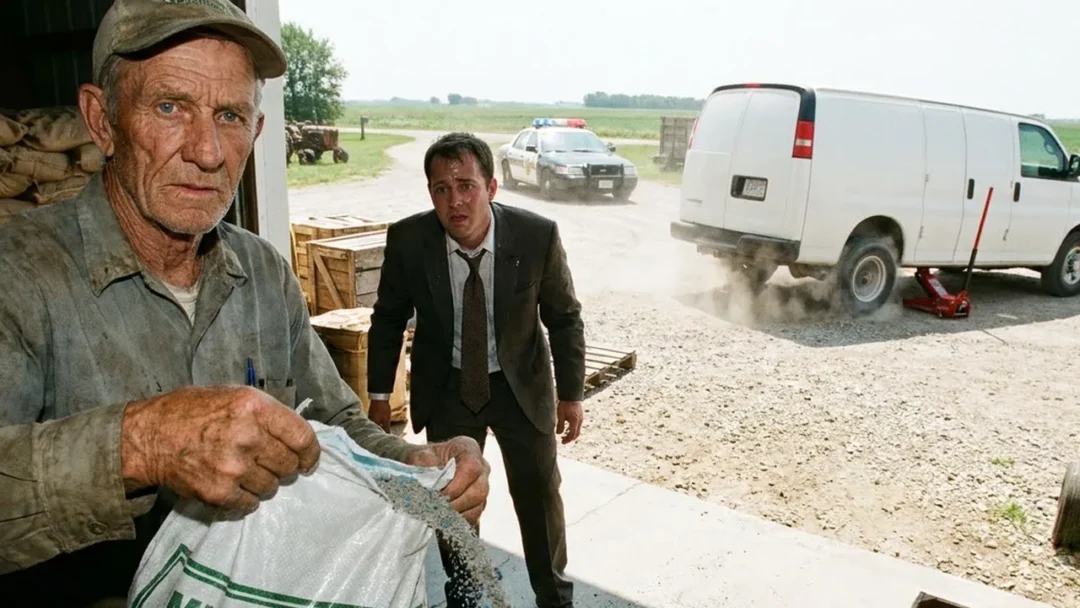
Within twenty minutes, the small loading dock of the Cedar Valley Cooperative was transformed into a command operations post.
Two state patrol cruisers and an unmarked black SUV carrying special agents from the Environmental Crimes Bureau arrived with sirens wailing. The agents seized Julian Vance’s burner phone, immediately obtaining an emergency federal wiretap authorization and triangulating the IP address of the Davenport dispatch terminal.
Acting on the coordinates, a joint task force of Iowa State Troopers, federal agricultural inspectors, and Scott County Sheriff deputies executed an emergency high-risk raid on an abandoned industrial cement-mixing facility situated along the Mississippi riverfront in Davenport.
The scene uncovered by the state investigators was staggering in its audacity.
Inside the cavernous, sheet-metal warehouse, investigators found three massive front-end loaders operating beside four hundred tons of raw, unwashed Mississippi river silt dredged from local shipping channels. Suspended above the mixing hoppers were pressurized chemical spray rigs containing thousands of gallons of commercial blue textile dye, water-soluble calcium chloride, and industrial borate salts.
Two automated bagging lines were running at full capacity, sealing the counterfeit mixture into counterfeit European polyethylene sacks printed with high-resolution forged German inspection seals.
Five twenty-ton commercial tractor-trailers, already loaded with seventy thousand bags of the toxic mixture and bearing forged bills of lading for grain cooperatives across three states, were intercepted at the terminal gate before they could merge onto Interstate 80.
The state agricultural chemist on the scene executed rapid gas chromatography testing on the seized material, delivering an alarming report directly to the governor’s emergency task force:
The counterfeit mixture contained nearly twenty-five percent raw sodium chloride and high concentrations of industrial heavy-metal borates—caustic industrial byproducts acquired from commercial leather-tanning facilities. Had the mixture been applied to agricultural soil, the excessive sodium would have collapsed the soil’s crumb structure, creating an impervious hardpan that would prevent water infiltration, while the toxic borates would have completely sterilized the soil’s nitrogen-fixing microbiome, rendering the farmland barren for nearly a decade.
The ringleaders of the Chicago-based syndicate—two corporate executives who had previously been barred from trading on the commodities exchange—were arrested at an executive airport in Moline as they prepared to board a private jet for Miami, their bank accounts frozen under federal anti-racketeering statutes.