The One Arm Weighted Pull Up And The Fake Welder Fraud
CHAPTER 5: THE TROOPERS ON THE RIDGE
The silence that settled over the bank-barn was broken only by the ragged, terrified wheezing of Tyler Riggs, pinned against the dented sheet metal of his van, and the distant, wailing siren of a police cruiser echoing across the limestone ridges of the Susquehanna Valley.
Elihu Miller did not release his grip until the crisp crunch of heavy tires on gravel sounded outside the double barn doors.
Slicing into the barnyard came the clean, grey-and-gold four-wheel-drive patrol SUV of the Pennsylvania State Police, accompanied by an unmarked black pickup truck bearing the insignia of the State Bureau of Criminal Investigation.
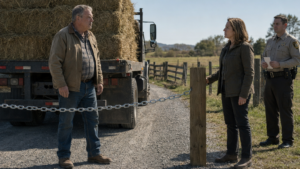
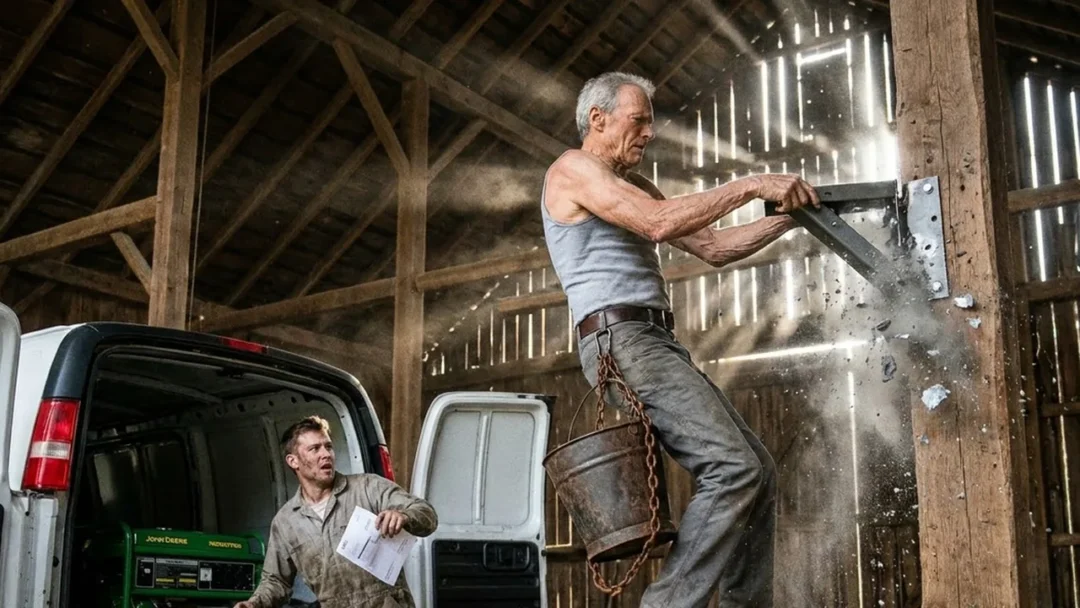
Trooper Brandon Cole stepped out of the vehicle, his duty jacket zipped tight against the afternoon breeze, his hand resting calmly on his sidearm as he took in the scene: the shattered steel bracket lying in the grey putty dust, the open van doors exposing the stolen John Deere generator, and seventy-three-year-old Elihu Miller holding the trembling contractor by the collar with one hand.
“Elihu,” Trooper Cole said with a slow, appreciative grin, stepping onto the threshing floor. “Your neighbor Sam called the precinct twenty minutes ago. Said he saw a white contractor van matching the burglary description parked behind your silo. Looks like you saved us the trouble of setting up a roadblock.”
Elihu released Tyler’s collar, stepping back with a calm nod. “Afternoon, Brandon. He brought Sam’s generator back to the neighborhood. And he tried to charge me three thousand dollars for auto-body filler on my hoist post.”
Trooper Cole shoved Tyler facedown onto the hood of the van, snapping heavy steel handcuffs around his wrists with two sharp, authoritative clicks.
“Tyler Riggs,” Trooper Cole announced, his voice echoing through the rafters. “You are under arrest for commercial burglary, grand larceny of agricultural equipment, and aggravated assault with a deadly weapon.”
While the secondary troopers secured the suspect in the rear of the patrol vehicle, Trooper Cole walked into the front cab of Tyler’s van to conduct an inventory search.
Tucked beneath the passenger seat, inside a black leather administrative binder, Trooper Cole uncovered an item that transformed a routine property recovery into a major regional criminal indictment:
It was a spiral-bound contractor’s notebook containing detailed hand-drawn maps of twenty-two dairy and grain farms across Lancaster, York, and Berks counties. Every entry included the exact layout of the property’s equipment sheds, the schedule of the farm families, the location of exterior security cameras, and whether the properties housed high-value commercial generators, diesel welders, or compact excavators.
Twelve of the entries were marked with bold red grease-pencil stars, indicating scheduled night burglaries over the next fourteen days.
“My God, Elihu…” Trooper Cole said, flipping through the pages in stunned disbelief. “This isn’t a lone thief. He’s been operating an organized regional property-theft network. He poses as a mobile welder during the day to case the barns, and his crew hits the farms with flatbed trailers at night.”
Elihu walked to the rear of the van, his calloused hand resting gently on the green steel housing of Sam Stoltzfus’s recovered generator.
“The soil around here is worked by honest hands, Brandon,” Elihu said softly. “A thief might think he’s smart with his fake credentials and his cheap glue. But when you build your life on lies, the first real weight you touch will always tear you down.”
The legal architecture of federal interstate property crimes operates under the National Stolen Property Act (18 U.S.C. § 2314), which establishes severe federal felony penalties for any individual who transports, transmits, or transfers in interstate commerce any goods, wares, or merchandise of the value of five thousand dollars or more, knowing the same to have been stolen. Furthermore, under the Racketeer Influenced and Corrupt Organizations Act (RICO), when property theft is executed through a pattern of organized predicate acts involving mail fraud, wire fraud, and interstate transportation, the statutory penalties escalate to asset forfeiture of all commercial enterprises, bank accounts, and transport fleets involved in the criminal conspiracy.
The legal documentation recovered from Tyler Riggs’s vehicle provided state investigators with an extraordinary window into the economics of predatory rural contractor scams. Operating under multiple commercial aliases, Riggs had exploited a significant regulatory gap in agricultural building codes: in many rural jurisdictions, agricultural structures located on working commercial farms are exempt from municipal building permit inspections and mandatory third-party engineering sign-offs. Scammers utilize this exemption to offer fast, un-permitted structural modifications to elderly barn owners, demanding immediate cash disbursements before the fraudulent nature of the work can be detected under seasonal operational loads.