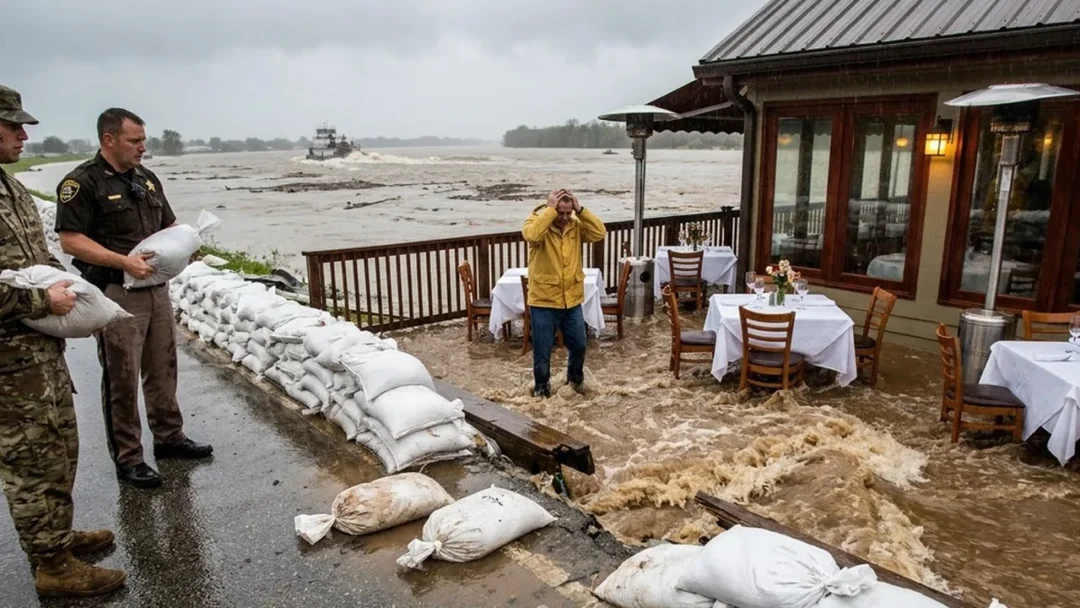
The River View That Swallowed Rourke’s Last Lie
CHAPTER 4: SACRIFICE ACREAGE
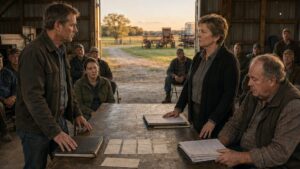
Naomi divided her force. One team stayed on the public wall. A high-water truck carried another toward the Santos farm, but the illegal discharge had cut the gravel road into channels. Dunn rode with the crew while Naomi and Tessa remained at the vault to reverse the gates.
Rourke objected that changing his system would damage his foundation. Naomi read the governor’s emergency authority from the order posted at dawn. “This is now flood-control infrastructure. Stand clear.”
They turned the first gate ten percent. Pressure climbed, steadied, and moved toward the original swale. Water surged beneath Rourke’s already flooded deck but began falling near the farms. At thirty percent, a coupling shook loose. Specialist Greene closed a manual bypass and wrapped the joint with a ratchet strap until a repair clamp arrived.
At the Santos road, the high-water truck could go no farther. Dunn and two soldiers launched a flat-bottom rescue boat tethered to the truck’s winch. The current shoved them sideways through a fence. They reached the farmhouse porch where Mrs. Santos held both children above the water on an outdoor table.
One child was asthmatic and had left his inhaler upstairs. Dunn climbed through a window, found it in a bedroom drawer, and returned as water broke the porch lattice. The soldiers loaded the family, dog, medication, and a plastic folder of identity papers. The winch drew them back foot by foot.
Halfway across, a submerged hay bale struck the boat. Its bow spun downstream until the tether snapped tight. Dunn shifted his weight low while Specialist Avery used an oar to keep the stern off a barbed-wire fence. The asthmatic boy began to panic. Dunn placed the inhaler spacer in his hands and counted each breath with him, making the task smaller than the water around them.
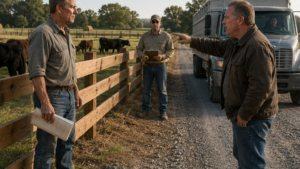
At the truck, medics warmed the children with foil blankets and checked oxygen saturation. Mrs. Santos refused transport until she saw her grandchildren strapped safely inside. She told Dunn that Rourke had offered to buy the farm after every flood, always within forty-eight hours of the damage. His offers decreased as her insurance premiums increased.
Dunn photographed the high-water line before leaving. Flow entered from the direction of Rourke’s hidden culverts, not from the riverbank. Fence grass lay flattened westward, opposite the natural flood direction. These humble physical signs would support the electronic gate logs later.
The rescue crew marked the abandoned house with reflective tape and reported every person accounted for. Only then did the driver reverse along the submerged road, guided by a soldier walking the safer ridge on a tether. What looked from a distance like a quick boat ride had consumed forty minutes, six trained people, and equipment needed elsewhere.
Naomi heard the rescue over radio fragments while bringing the gates to sixty percent. She could not see the people whose lives depended on each turn. That was engineering at scale: moral consequences carried through metal no one noticed until it failed.
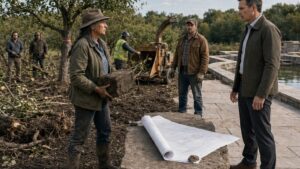
At eighty percent, the restaurant’s hidden berm began leaking through fresh soil. Excavator tracks marked its crown. Tessa determined that somebody had raised it the previous night, further directing water toward the farms. Rain softened the fill, revealing blue paint on the gate hardware and a stamped contractor code.
Naomi knew the code. DB-4 appeared in her father’s notebooks for drainage bypasses. Seeing it on illegal work felt like a verdict.
Rourke noticed her reaction. “Daniel designed what worked. He understood that the town needed an economic anchor.”
“He would not call families sacrifice acreage.”
“He signed.”
The rescue truck returned with the Santos family. Dunn stepped down carrying the coughing boy. Mud coated everyone except Rourke. The deputy told Naomi that the child was stable and the access road would be gone within minutes.
Tessa completed the reversal. Water reclaimed the original channel beside the restaurant. The farm gauge began to fall. Soldiers breached the private berm in two controlled places, lining the cuts with rock so the current would not erode toward the public road.
State investigators arrived and took custody of the control vault. Their engineer found the motors had remote cellular modules. Login records showed Rourke’s personal phone adjusted the gates during five floods, always shifting peak water toward neighboring land. Insurance claims from those farms had driven two owners into foreclosure. Rourke later purchased both parcels through another shell company.
Dunn arrested him for interference with emergency operations and reckless endangerment. Rourke’s attorney obtained a rapid hearing and argued that the deputy lacked proof his client operated the system today. The judge set restrictive release conditions but did not hold him.
As Rourke left in his lawyer’s truck, he looked at the exposed monument and then at a yellow excavator parked near the maintenance shed.
Naomi’s mother called. She had watched the news and heard Daniel’s name. “The steel trunk,” she said. “Your father told me never to open it unless the river uncovered the brass marker.”
Inside the trunk, beneath his field notebooks, Naomi found a hand-drawn map. Its symbols matched the illegal gates—and a note in Daniel’s script named Vincent Rourke.
Beside the name he had written a date three days before his fatal crash.
Naomi copied the page number into the incident log and called Tessa over as a second witness. Neither woman interpreted it aloud. The coordinates, gate codes, and date could speak after investigators verified the ink, paper, and sequence of entries.