The River View That Swallowed Rourke’s Last Lie
CHAPTER 5: THE NOTEBOOK IN THE STEEL TRUNK
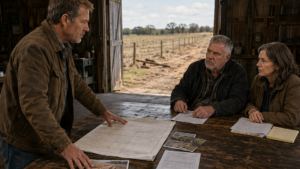
Naomi photographed every page before moving the notebook. Dunn arranged a deputy escort to bring the trunk from her mother’s house. Chain of custody mattered even when evidence came from family.
Daniel’s entries documented the first permit inspection. He had found the public monument, rejected the deck, and refused to certify Rourke’s claimed elevation. Weeks later, a replacement page carrying a copied signature appeared in the county file. Daniel wrote that Commissioner Halpern threatened Naomi’s scholarship and her mother’s clinic job if he went public without undeniable proof.
The notebook also showed Daniel’s failed attempts to create an official trail. He mailed questions by certified post, but county counsel returned them marked as drafts. He requested an independent survey; funding disappeared from the next meeting agenda. A state hotline entry had been closed after an anonymous caller supplied Daniel’s forged approval as proof no violation existed.
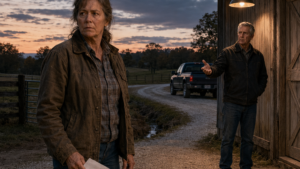
Naomi read the dates against family memories. The week he stopped sleeping was the week the hotline closed. The day he missed her commissioning ceremony was the day he followed a concrete truck to Rourke’s property and photographed workers burying the monument. What she had stored as evidence of indifference now formed a record of frightened persistence.
None of that excused keeping his family in ignorance. His strategy had isolated him and made the evidence easy to suppress after his death. Naomi wrote that conclusion into her own statement. She would not replace one protective lie with another merely because the second honored someone she loved.
Her mother listened over the phone and agreed. “He thought bearing it alone kept us clean,” she said. “It only kept us blind.”
They identified every notebook page by number and noticed three missing leaves. Indentations on the next sheet preserved fragments of writing. Tessa photographed them under angled light, revealing the words FILM IN BASE and HALPERN ORIGINAL. The message directed them back to the brass monument.
Naomi asked the state investigator to take custody of the trunk immediately. She signed the seal across its latch and watched it leave in another vehicle. Whatever the pages revealed from that point forward would belong to a public case, not to the Bell family’s private version of history.
Her mother approved. “Bring back the truth,” she said. “The trunk was never the part I wanted to keep.”
He had begun collecting it. The DB-4 marks were not design approvals; they meant “deliberate bypass, four feet,” his private flag for altered drainage. Coordinates led to photographs stored in an old levee instrument box.
Naomi remembered accusing her father of cowardice during their last dinner. He had said only that truth released too early could be buried with the person telling it. She mistook caution for surrender and left before dessert. It was their final conversation.
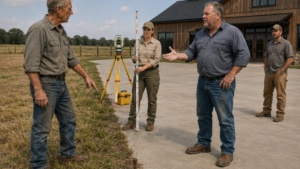
Tessa overlaid Daniel’s coordinates on modern lidar. One point fell beneath the restaurant’s wine cellar, another at the old pump station, and the third under the exposed survey monument. His note said the monument’s concrete base contained a sealed film canister.
The river now churned around that base. Removing the canister during the crest risked destabilizing the deck debris. Waiting risked Rourke destroying it. State investigators approved documentation in place and assigned two deputies to guard it.
Naomi released copies of the notebook to the incident commander, state police, and county counsel. She also gave a factual statement to local media. She did not hide that Daniel had delayed disclosure. He had tried to protect his family and had paid for that compromise with doubt. The evidence, not filial loyalty, would decide what his actions meant.
Commissioner Halpern, now a state lobbyist, called within ten minutes. He said Daniel’s notes were grief-driven fiction and threatened defamation action. The call was recorded under the emergency investigation order. When asked whether he knew what DB-4 meant, Halpern answered too quickly: “That bypass was never built.” Investigators had not told him it was.
Dunn heard the recording and smiled without humor. “People step into holes when they think they own the ground.”
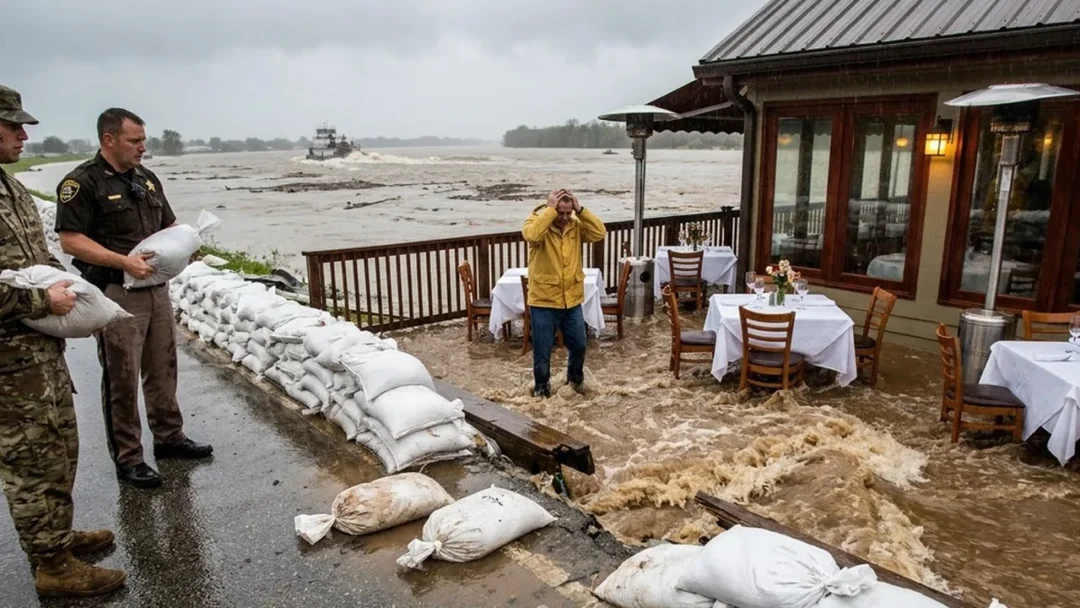
The crest arrived after dark. Searchlights painted the sandbag wall while rain struck the river sideways. Soldiers patrolled for boils—small fountains of muddy water signaling pressure beneath the road. Each one was ringed with bags, never plugged, so water could escape without carrying soil.
June brought coffee from the upper restaurant kitchen and asked how to help. Naomi placed her on a civilian supply line away from hazards. Morrow Bend residents arrived with tarps, gloves, and food. The emergency wall became a common project rather than a barrier hiding private damage.
At 10:17 p.m., one of the monument guards reported headlights near the maintenance shed. A yellow excavator rolled out with its work lights off. Its boom stayed low as it crossed the flooded lot toward the broken deck.
Dunn ordered it to stop. The operator accelerated.
Thermal binoculars showed Rourke in the cab. Released only hours earlier, he had returned through an unmonitored farm track. His phone connected to the excavator’s control system and to the hidden gate network.
Naomi positioned a Guard truck across the approach, leaving space so its weight did not burden the levee edge. The excavator stopped twenty yards away. Rourke raised the bucket above the monument and spoke over the machine radio.
“Move the truck, Sergeant, or I drop thirty tons where your father hid his lie.”
Behind him, the river began spilling over the private auxiliary berm.