The River View That Swallowed Rourke’s Last Lie
CHAPTER 6: THE MACHINE AT THE MONUMENT
Naomi did not move the truck. She ordered soldiers off the soft shoulder and requested the utility technician who knew the excavator model. Dunn approached behind an armored rescue shield, body camera recording.
“Shut down and step out,” he called.
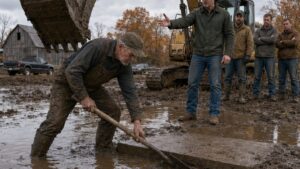
Rourke lowered the bucket until one steel tooth touched the concrete around the monument. “This structure is on my property.”
“The survey says otherwise.”
“The survey will say nothing in sixty seconds.”
The excavator’s tracks began to turn. Naomi saw water pulse from beneath the left tread. The machine stood over the old drainage channel; its weight could collapse the culvert and open a path under the public road.
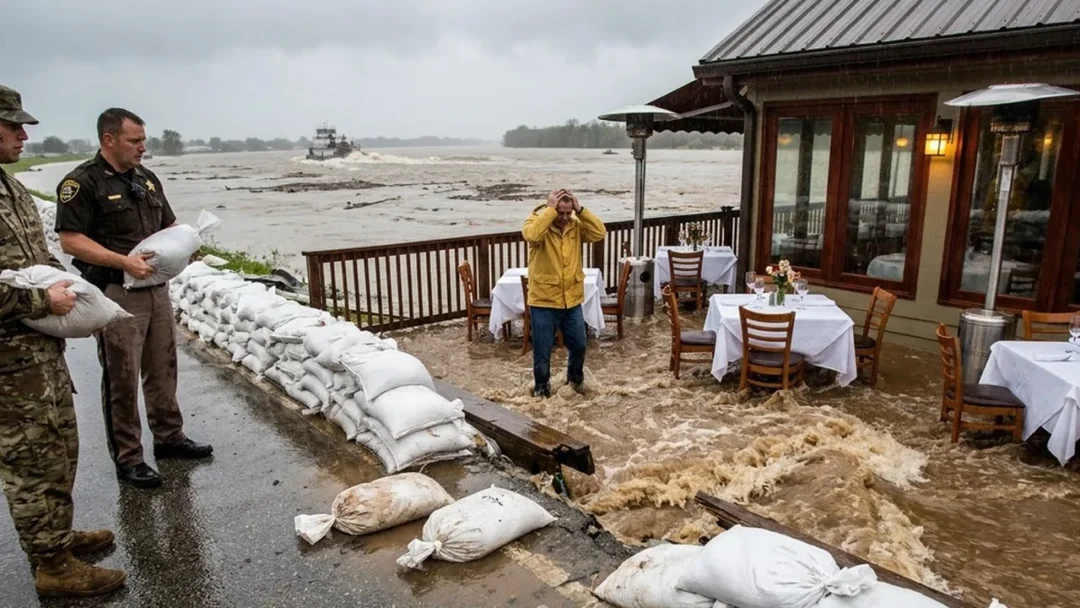
She radioed the towboat upstream. Earl Moseley answered from a mooring beyond the bend. Naomi asked him to hold all engine thrust. Even a modest wake could load the weakened bank. He acknowledged and warned that debris was gathering against the restaurant pilings.
The utility technician identified a wireless service cutoff, but Rourke had disabled it. A hydraulic isolation fitting sat behind the rear panel. Reaching it required crossing the swing radius.
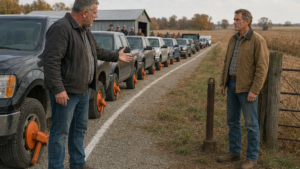
June supplied an old restaurant delivery van. Naomi directed soldiers to park it against the excavator’s counterweight on the side away from the river, limiting rotation without striking the cab. They chocked the van and withdrew. Rourke swung. The counterweight crushed the van’s rear doors but stopped short of the monument.
The maneuver bought seconds, not safety. Hydraulic pressure lifted the van’s rear axle and dragged its tires through mud. Naomi ordered a loader to place a bulk sandbag against the van’s front bumper, creating a compressible brace. She kept personnel outside the machine’s arc and used spotters whose only job was to watch ground failure.
Dunn continued speaking to Rourke, asking about the release order and reminding him that no document could be saved by destroying a federal marker. The questions were not persuasion alone. They kept Rourke transmitting over the radio, recording his knowledge and intent. He answered that surveys belonged to whoever could afford to improve the land. Then he admitted the restaurant had been built “four feet above the problem,” repeating the precise fraudulent difference without prompting.
State investigators captured the transmission at the command post. Tessa wrote the time beside her measurement log. Evidence accumulated while the crisis unfolded: threat, number, machine position, damaged concrete, and the remote-gate connection from Rourke’s phone.
When the excavator tooth touched the monument, Naomi saw the bank behind it slump half an inch. A soldier planted a visual stake and called each movement. If settlement reached three inches, every responder would withdraw, even if the evidence remained. No artifact justified burying a crew beneath a levee.
Dunn used the pause to climb the track and pull the manual fuel shutoff. Rourke drove the bucket downward. Concrete cracked around the brass disk. Naomi grabbed the monument’s survey rod and marked its exact center from two stable benchmarks while Tessa recorded continuous video.
The diesel coughed. Rourke opened the cab and jumped into knee-deep water, running toward the restaurant dock. Dunn followed but slowed at the broken edge. Rourke had a rescue boat tied below, its motor already warm.
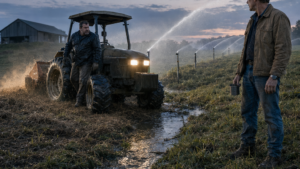
He cut the line and powered into the flooded channel. The boat’s wake struck the auxiliary berm just as debris loaded the outer pilings. Soil slumped. Water poured through a new notch toward Moseley’s farm and the pump station.
Naomi had to choose between pursuit and the breach. She chose the breach. “All crews, auxiliary berm. Rock bags first, then sand. Establish upstream safety.”
Dunn called river patrol and returned to help. Guard trucks dumped bulk bags near the notch. Soldiers clipped into lifelines and placed them with a loader while residents filled smaller gaps. Tessa calculated that they had twenty minutes before erosion reached the pump station foundation.
At the damaged monument, cracked concrete exposed a dark cylinder. June retrieved it under Dunn’s direction after photographs fixed its position. Inside were microfilm negatives of the original survey, images of hidden culvert construction, and a signed memo from Halpern instructing Creel to substitute the false elevation.
The film survived because Daniel had sealed it against the water he knew would someday return.
River patrol cornered Rourke near a flooded grain terminal. He refused to stop and steered between floating tanks. His wake broke one loose. The steel tank rolled toward his boat, forcing him against a conveyor frame. Officers pulled him from the water after the hull split. The entire pursuit, including his departure from the monument and the damaging wake, was captured by patrol video and Earl’s river radio.
Back at the berm, the first bulk bag sank into the notch. Water curled around it. The second locked beside it, reducing the flow. Naomi’s crew placed a third while pumps drew pressure from the landward pool.
Then a deep vibration traveled through the mud. Tessa’s gauge showed the culvert beneath them beginning to collapse. If it failed, the temporary bags would drop into the void and the river would take the pump station.
Greene drove stakes along the vibration line and found it advancing toward the road at nearly a foot per minute. The loader could add weight but might accelerate the collapse. Naomi ordered it back and shifted to smaller bags placed by tethered crews, accepting slower construction to preserve the ground beneath them.
Naomi looked at Daniel’s hand-drawn map. A forgotten emergency gate lay beneath the old station floor—but closing it required someone to enter the flooding tunnel before the next bank section fell.