The Bedrock Iron Boundary Post And The Torn Chrome Bumper
CHAPTER 6: THE ANATOMY OF A FRAME TEAR
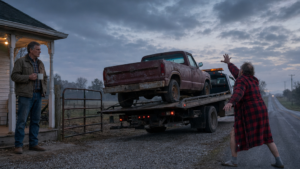
Within fifteen minutes, a heavy commercial flatbed wrecker from Buckeye State Towing pulled onto Jaeger Street, its yellow safety lights flashing across the brick facades.
The driver, Kurt Sterling, was a master certified structural rigger who had handled heavy recovery across Ohio for twenty-five years. He stepped down from the cab, surveyed the mangled rear of the Denali, and let out a low, appreciative whistle through his teeth.
“Lord have mercy,” Kurt muttered, shaking his head as he knelt beneath the rear axle of the truck with a high-intensity inspection light. “What in the world did you hitch this to, son? A buried battleship?”
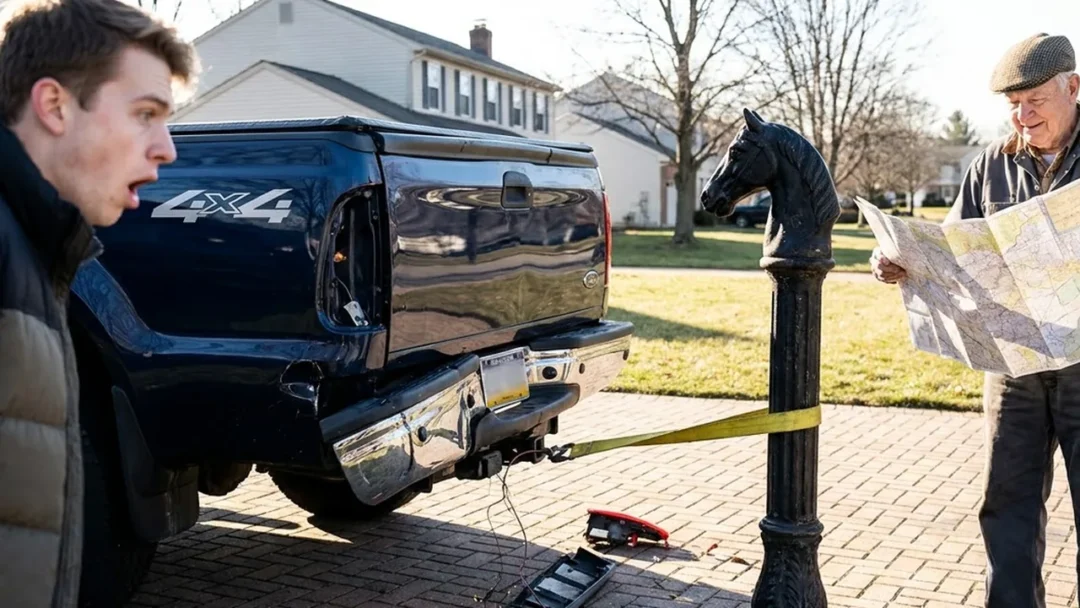
“It was just an iron post!” Chad yelled defensively, his voice cracking with humiliation. “The bumper should have held! It’s a heavy-duty truck!”
Kurt stood up, shining his beam directly onto the hydroformed steel frame rails. “Son, modern pickup bumpers are held on by four three-eighths-inch grade-five bolts. They’re designed to break away in a highway rear-ender so the impact doesn’t crush the passengers’ spines. You hooked a kinetic recovery snatch-strap to a cosmetic step-bumper and tried to pull an unyielding bedrock anchor. Look at your frame horns.”
Kurt pointed his light into the wheel wells.
The heavy steel box-section frame rails of the seventy-thousand-dollar truck were twisted diagonally by nearly four inches. The severe rotational torque of the one-sided pull had bent the entire vehicle chassis out of factory alignment. The bed was misaligned with the cab by three inches, and the rear leaf-spring hangers were pulled loose from their structural rivets.
“That truck has structural frame torsion, Mr. Bradford,” Kurt stated with cold, mechanical finality. “The frame is bent beyond manufacturer straightening tolerances. Under Ohio motor vehicle insurance regulations, once the hydroformed frame rail suffers structural deformation at the suspension mounting points, the vehicle is branded an unrepairable total constructive loss.”
Kurt pulled out his digital tablet, tapping through the commercial towing intake sheet. “And when your insurance adjuster sees that yellow tow strap tied around your bumper and reads Officer Miller’s police report documenting intentional demolition of a historic monument, your comprehensive claim will be denied in under sixty seconds under the intentional-act exclusion clause. You’re on the hook for the entire remaining balance of that truck loan, plus the towing fees, plus the hazardous fluid cleanup.”
Officer Miller stepped forward, unclasping a pair of steel handcuffs from his belt. “Chad Bradford, turn around and place your hands behind your back.”
Chad took a step backward, his hands trembling violently. “Wait! Arrest? You’re arresting me?”
“You operated heavy machinery on a historic right-of-way, committed felony vandalism against a certified survey monument, and endangered neighboring residential structures,” Officer Miller said, taking Chad firmly by the arm. “You are under arrest for Criminal Damaging, Desecration of Historic Property, and Reckless Operation.”
The steel handcuffs snapped shut around Chad’s wrists with a clean, sharp click that echoed off the ancient brick walls. Neighbors who had gathered on their front porches—tenants Chad had harassed, elderly homeowners whose parking he had blocked—watched in quiet, vindicated satisfaction as the landlord was escorted to the back of the cruiser.
Kurt Sterling’s assessment of the Denali’s frame damage was grounded in twenty-five years of heavy recovery experience for major insurance underwriters. When a hydroformed truck frame experiences rotational torsion—where one frame rail is pulled backward while the opposing rail is compressed forward—the vehicle’s structural geometry is permanently compromised. Even if a specialized frame-straightening shop utilizes hydraulic pulling towers to pull the steel back into visual alignment, the molecular integrity of the metal along the crumple zones is fatally fatigued, meaning the truck could never pass a certified state safety inspection or provide crash protection in a future collision.
The insurance implications were catastrophic for Chad Bradford. Under standard commercial fleet and personal auto underwriting agreements in Ohio, comprehensive and collision coverage is predicated on accidental loss. When a policyholder deliberately attaches heavy towing equipment to an unreinforced part of their vehicle and attempts to use the truck as an industrial battering ram or demolition tool, the loss is legally classified as an intentional tort. Kurt Sterling took detailed photographs of the yellow strap cinched around the bumper step plate, knowing that when the claims adjuster received the file, the claim would be denied in its entirety, leaving Chad personally liable for the full balance of the seventy-thousand-dollar loan on a truck that was now worth only its scrap weight in steel.
Kurt Sterling shook his head as he hooked a heavy nylon safety sling under the Denali’s front A-arms, preparing to winch the crippled truck onto his flatbed. “You see this all the time with these modern luxury haulers, Officer,” Kurt remarked to Miller. “People think because a truck has leather massage seats and a sixty-thousand-dollar price tag, it’s built like an armored tank. But the frame on this rig is stamped out of the same thin-gauge steel as a family minivan. You don’t try to pull out an immovable object with a cosmetic bumper. It’s basic high-school physics.”