The Twelve Kilogram Sledgehammer And The Hollow Oak Beam
CHAPTER 2: THE HOLLOW CORE
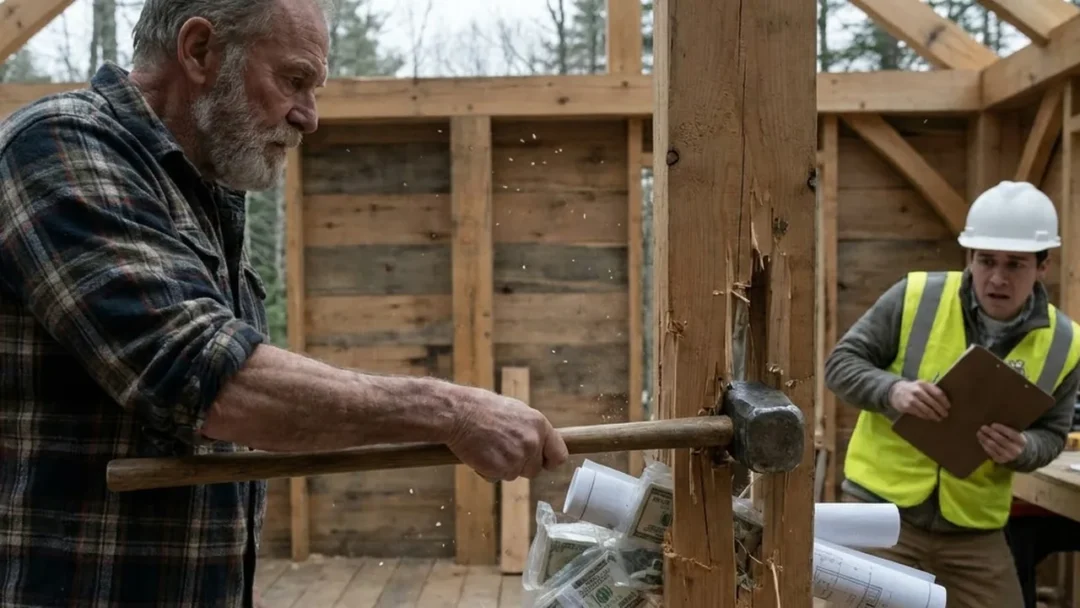
The Great Hall of the lodge fell into an eerie, suffocating silence, broken only by the sound of rain lashing against the bare roof plywood and the ragged, shallow breathing of Damon Vance. On the pine floorboards between their boots lay twelve vacuum-sealed plastic bricks—each containing fifty thousand dollars in crisp federal reserve notes, banded with institutional paper wrappers from the Northern Adirondack Trust Bank.
Beside the cash lay the rolled linen blueprints that had tumbled from the hollow cavity. They were not the approved municipal plans for the community lodge. They were confidential structural survey schematics for the regional elementary school and the county emergency response facility in Saranac Lake, both of which had been constructed by North Ridge Construction two years earlier. Marked in thick red grease pencil across the structural column details were the chilling words: Hollow box substitution approved; savings escrowed account 409.
Damon fell to his knees in the sawdust, his hard hat tumbling from his head as his hands scrambled frantically across the floor, trying in vain to gather the spilled cash bricks back into his designer jacket.
“Thomas… listen to me, please!” Damon stammered, his face drenched in cold sweat, his eyes darting frantically toward the shadows of the unlit corridor behind them. “This isn’t what it looks like! This is private escrow money! We were holding it in physical reserve for the timber suppliers! My uncle authorized the entire contingency fund!”
Thomas did not move an inch. He stood with the twelve-kilogram sledgehammer resting on his right shoulder, his left hand pointing with calm, devastating precision at the shattered timber post.
“You took three hundred and eighty thousand dollars of taxpayer money approved for kiln-dried white oak timbers, Damon,” Thomas said, his voice flat as an iron anvil. “You bought salvaged demolition pine from an abandoned pulp mill in Tupper Lake for eight dollars a stick. You routed out the cores on a horizontal table saw, glued a quarter-inch oak veneer to the exterior with construction adhesive, and stuffed the town’s stolen school bond funds into the hollow guts. That roof beam above your head is carrying twelve tons of wet Douglas fir rafters. In a heavy December snowstorm, this hollow pine post would have buckled under the shear load, crushing every child and rescue volunteer in this hall.”
Damon’s stammering ceased. His eyes narrowed, turning from panic to a desperate, feral cornered-rat malice. He shoved three of the cash bricks into his coat pockets, scrambled to his feet, and backed toward the heavy timber exit doors at the rear of the hall.
“Nobody has to know about the beams, Thomas,” Damon hissed, his hand reaching into his pocket and pulling out a heavy brass utility lighter. “I’ll give you two hundred thousand dollars in cash right now. You sign the inspection approval, you take your share, and you retire to Florida. If you refuse, my uncle controls the county grand jury. You’ll spend the rest of your life in an iron bunk in Dannemora for extortion.”
“I spent forty years building honest bridges for the people of this state, Damon,” Thomas replied, stepping forward with his boots striking the floorboards like oak pile-drivers. “I don’t need blood money to buy my grave.”
Damon sneered, his thumb flicking the lighter wheel. A bright yellow flame leaped from the wick. “Then you can burn with your principles, old man.”
Before Thomas could cross the thirty feet of open floor, Damon whipped an open can of industrial lacquer thinner from the painting station, splashed the solvent across a pile of dry cedar shavings and pine subflooring beneath the main load-bearing wall, and dropped the lighter into the puddle.
WHOOOOOSH!
A roaring wall of orange flame erupted instantly, feeding on the volatile chemical fumes and climbing the dry timber studding toward the ceiling rafters with terrifying speed. Thick, choking black smoke billowed outward, filling the upper vault of the Great Hall and blotting out the gray light of the windows.
Damon sprinted through the heavy exterior timber fire doors, slammed the four-inch solid oak portals shut, and engaged the heavy commercial steel drop-bar on the outside with a deafening, echoing clank.
From the outside, Damon’s muffled voice screamed through the timber seams: “Die in your burning lodge, MacIntyre! By morning, the inspectors will just find the ashes of an unfortunate electrical accident!”
Trapped inside the rapidly filling inferno, surrounded by a wall of crackling flame that was beginning to lick the structural ceiling ties, Thomas MacIntyre did not panic. He took a single, calm breath through his wool shirt, gripped the hickory handle of his twelve-kilogram sledgehammer with both hands, and turned toward the barred timber doors.
The structural forensic analysis of composite veneer substitution reveals the systematic calculation behind Damon Vance’s embezzlement scheme. In forensic building investigations, an architectural veneer is defined as a non-structural protective facing applied over an underlying substrate. To fabricate the fraudulent king-posts, North Ridge Construction had deployed an industrial multi-axis horizontal routing table, hollowing out sixty-percent of the cross-sectional mass of salvaged sixty-year-old pine flume timbers. The remaining perimeter wall, barely half an inch thick, possessed less than five percent of the critical buckling resistance required by the New York State Uniform Fire Prevention and Building Code. By utilizing high-tack structural polyurethane adhesive to bond a quarter-inch rotary-sliced veneer of kiln-dried white oak to the exterior, the finished column presented an identical aesthetic grain and color to certified architectural lumber. Under casual visual inspection by municipal building clerks who lacked tactile woodworking experience, the hollow box appeared solid and impenetrable, masking the cavernous internal void where millions of dollars in stolen public municipal infrastructure bonds could be sequestered in waterproof polymer packaging.